
Second opinions are usually filed under member benefit. They appear in the wellbeing section of the policy, next to telehealth, and they are marketed to the insured rather than to the underwriter.
That is a misfiling. A structured second clinical opinion is one of the few interventions available to an insurer that changes the treatment plan and the claim at the same time, and it does so without asking anybody to argue about price.
Where the plan actually changes
Published second opinion series, across a range of specialties and health systems, consistently find that a meaningful minority of cases come back with a changed diagnosis, a changed management plan, or both. The proportion varies with the specialty and with how the study was designed, and it is never trivial.
The distribution is what matters commercially. The plan changes most often where three features coincide: the intervention is elective rather than emergent, it is expensive and largely irreversible, and there is genuine equipoise in the evidence about whether it is the right thing to do.
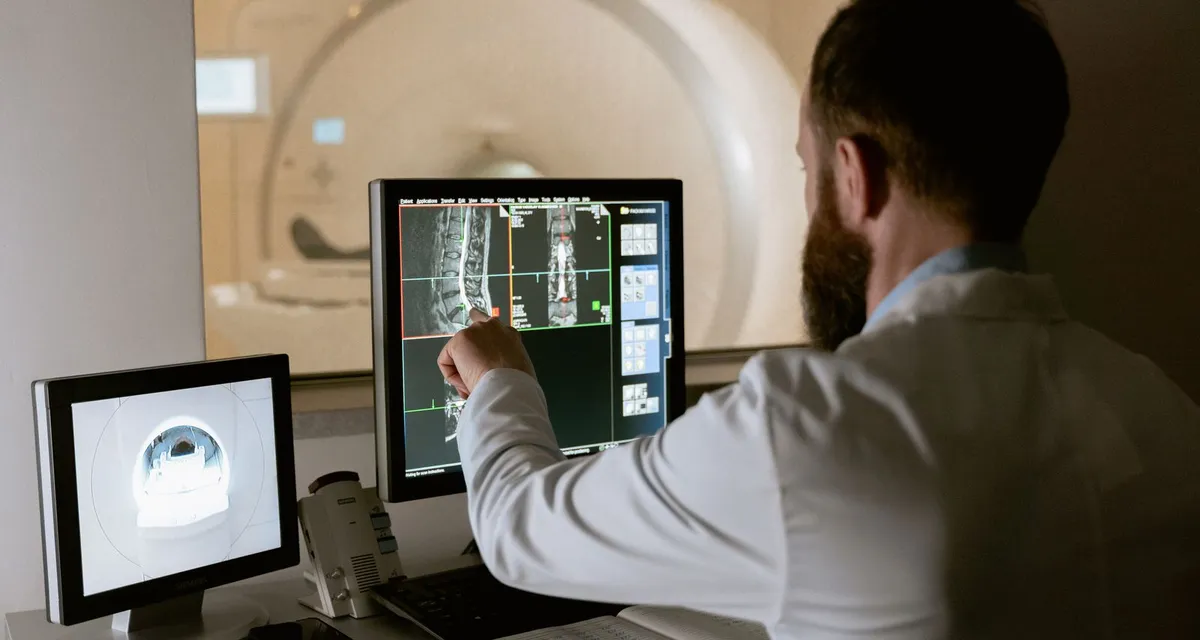
Elective spinal surgery is the clearest example. So is arthroplasty in a patient who has not exhausted conservative management, interventional cardiology on stable disease, and some oncology regimens where a widely accepted alternative exists at a very different cost. In each of these, two competent specialists can look at the same imaging and reach different, defensible conclusions.
Where the evidence is settled and the case is urgent, second opinions change very little and should not be commissioned. An acute abdomen does not need a review. Recognising the difference is most of the skill.
The saving is a consequence, not the objective
This distinction is not decoration, and it decides whether the programme works.
A review commissioned to reduce a cost tends to produce a conclusion the insurer wanted, which is worth nothing to the patient, nothing in front of a regulator, and nothing at the point where somebody asks how the decision was reached. A review commissioned to answer a clinical question produces an answer that occasionally costs more than the original plan, and that is the version that earns its standing.
The savings arrive anyway, and they arrive in a shape that is easy to miss. The headline case is the operation that does not happen. The commoner case is the operation that happens at the right time, in the right setting, after the conservative pathway that should have preceded it. That is not a cancelled claim. It is a claim that ran in the correct order, which usually costs less and reliably produces a better outcome.
This is the same argument as the one in cost containment beyond network discounts, applied one step further upstream. Discounts work on price. Medical necessity works on volume, and a second opinion is the most collegial instrument available for asking a necessity question.
Timing decides whether it is a lever or a comment
The value of a second opinion collapses along the pathway, and faster than most people expect.
Before authorisation, it is a lever. Every option is still open, no theatre list has been booked, and the patient has not yet been told what is going to happen to them. After authorisation and before admission, it is still useful and considerably harder, because expectations have been set and reversing them has a cost of its own. After the procedure, it is an audit finding. It may improve the next case. It cannot do anything for this one.
That is why the second opinion belongs at the same point as the guarantee of payment rather than in the wellbeing benefits. It is a pre-claim instrument, and the reasoning is set out in pre-claim clinical intelligence.
The practical consequence is that turnaround time is not an administrative detail. A review that takes three weeks on an elective pathway has usually missed the moment it was commissioned for.
The objection worth answering
The strongest objection to any of this is that a clinician reviewing a case at distance has less information than the doctor sitting with the patient, and is therefore in no position to second-guess them.
The premise is correct. The conclusion does not follow.
A reviewer working from the full record, including the imaging rather than the report of the imaging, is not attempting to replace the examination. They are asking whether the proposed intervention is supported by the evidence for this presentation, whether the steps that normally precede it have been taken, and whether an alternative with a different risk profile has been considered and rejected on stated grounds. Those are answerable at distance. Whether this patient’s abdomen is tender is not, and a reviewer who strays into that territory has overreached.
Incentives are not neutral on either side. A surgeon in a fee for service market has a reason to operate, and an insurer has a reason to prefer that they do not. The way through that is not to pretend either incentive is absent. It is to make the reasoning explicit, attach a named clinician to it, and let it be read by the treating team, the insurer and, if it comes to it, whoever reviews the case afterwards.
Running one so that it holds up
Five things separate a second opinion that changes a case from one that generates a document.
A real question, written down. Not “please review”, but whether decompression is indicated in this patient at this point, given what conservative management has already been tried.
The complete record, including imaging. A review conducted on a two line summary is guesswork with a specialist’s name attached to it.
A reviewer matched to the question and independent of the outcome. Same specialty, no relationship with the treating facility, no interest in whether the procedure happens.
A stated turnaround, honoured. On an elective pathway the useful window is days.
The reasoning recorded at the time and returned to the treating team, not filed with the insurer alone. A second medical opinion that the treating physician never sees cannot change the plan, which was the entire point.
What to measure
Not the saving percentage. On a second opinion programme that number is close to meaningless, because the counterfactual is a treatment plan that never ran.
More honest measures are the proportion of commissioned reviews that resulted in a documented change of plan, the interval between the request and the reviewer’s answer, the proportion commissioned before authorisation rather than after it, and the proportion where the treating team engaged with the reasoning rather than restating the original position. That last one is a measure of how the programme is being received, and it is the one that predicts whether it will still be working in a year.
Where this sits at UCS Assist is inside complex case management, commissioned by a clinician who owns the case rather than triggered by a spend threshold, with the question, the reviewer and the reasoning recorded in Atlas as the case runs. The commercial argument for it sits alongside the rest of our cost containment work, which is where an insurer will usually meet it first.