

Medical repatriation from Austria
Austria is the Alpine corridor where the card in the patient's wallet actually helps. The mountain problem is identical to Switzerland's. The payment position is not, and the difference is worth understanding before the season starts.
2 to 2.5 hours from Innsbruck, Salzburg or Vienna, plus the valley road leg from the resorts
A UK GHIC gives access to the state system on the same basis as an insured resident, which is the material difference from Switzerland. Rescue, helicopter and private supplementary charges sit outside it
What we typically see from Austria
- Ski and snowboard trauma across the Tyrol, Salzburgerland and Vorarlberg, at the highest volume of any Alpine corridor we run
- Knee, shoulder and wrist injury requiring surgery, which Austrian units perform quickly and to a high standard
- Head and spinal injury flown directly to a trauma centre, where timing rather than treatment is the hard decision
- Apres-ski falls and alcohol related injury, a genuinely distinct evening caseload separate from piste trauma
- Summer mountain injury from hiking, via ferrata, canyoning and mountain biking
- Cardiac events at altitude in visitors who arrive from sea level and exert themselves immediately
The same mountain, a different bill
For a skier there is no meaningful difference between a bad afternoon in St Anton and a bad afternoon in Verbier. For an insurer there is a large one.
A UK GHIC gives access to the Austrian state system on the same basis as an insured resident. In Switzerland it is not accepted for most UK visitors at all. Same injuries, same terrain, same retrieval problem, materially different exposure, and it is worth an insurer treating them as two separate corridors even though the customer experience looks identical.
That does not make an Austrian case free, and the gaps are specific.
What the card does not reach
Three things generate accounts outside the state cover, and all three are routine rather than exceptional.
Mountain rescue and helicopter transport are billed by the organisation that carried them out, separately from the hospital, and the card does not cover them. On a corridor where a large share of patients arrive by air from a piste, that is not a rare event. It needs identifying while the case is live rather than surfacing weeks later, and the same applies to any secondary transfer between a valley hospital and a larger centre.
Private supplementary charges arise when a patient is admitted to a private room or treated under a private consultant, which happens more often than visitors expect and is sometimes agreed by a patient in pain who is signing whatever is in front of them.
The journey home, as always, is covered by nothing.
An insurer that reconciles only the hospital account on an Austrian case has closed something that is not finished.
The retrieval is the timeline
The flight home is two to two and a half hours. Everything difficult happens before it.
Retrieval from the piste is frequently by helicopter to a valley hospital. Those hospitals are excellent and they see more ski trauma in a season than most UK units see in a decade. They are also a long road journey from Innsbruck or Salzburg in winter, and that journey rather than the sector determines when the patient gets home.
Plan bed to bed. A timeline built backwards from a departure slot will slip at the first pass, and on a corridor this busy the scheduled stretcher space that slipped is not always there tomorrow. Where it is tight, routing via Munich frequently solves it, at the cost of a longer ground leg across the border.
Two seasons, and the evening one
Winter is the obvious season, and within it there is a second caseload that gets less planning than it deserves. Apres-ski produces falls, fractures and head injuries in the evening, in patients who have been drinking, often indoors rather than on the mountain. Clinically these are ordinary. They complicate consent, history taking and the assessment of a head injury, and they arrive at the least convenient hour.
Summer is genuinely busy. Hiking, via ferrata, canyoning and mountain biking produce trauma in the same terrain with the same retrieval characteristics, in a visitor population that skews older. The transport decision is the same, and the fitness to fly question is often harder because the patient has more comorbidity.
Before the patient moves
Fitness to travel is assessed against the patient’s actual trajectory by a UK clinician who is accountable for it, and revisited if the picture changes. The UK receiving bed is secured before departure, matched to the consultant and the pathway rather than to the arrival airport. The clinical record reaches the receiving team ahead of the patient, and ground transfers at both ends are arranged and briefed.
Every decision is recorded in Atlas as it is made. For the general picture see medical repatriation and patient transport, and for the same mountains with a very different payment position, medical repatriation from Switzerland.
Where we stage from
The airport a case leaves from is a clinical decision as much as a logistical one, and it is set by where the patient is and what they can tolerate on the ground.
- Innsbruck (INN): the heart of the Tyrol and the shortest ground legs from the major resorts
- Salzburg (SZG): Salzburgerland and the eastern resorts, with good winter charter capacity
- Munich (MUC): frequently the better answer for scheduled stretcher space, at the cost of a longer road leg across the border
- Vienna (VIE): the east and the widest year-round capacity
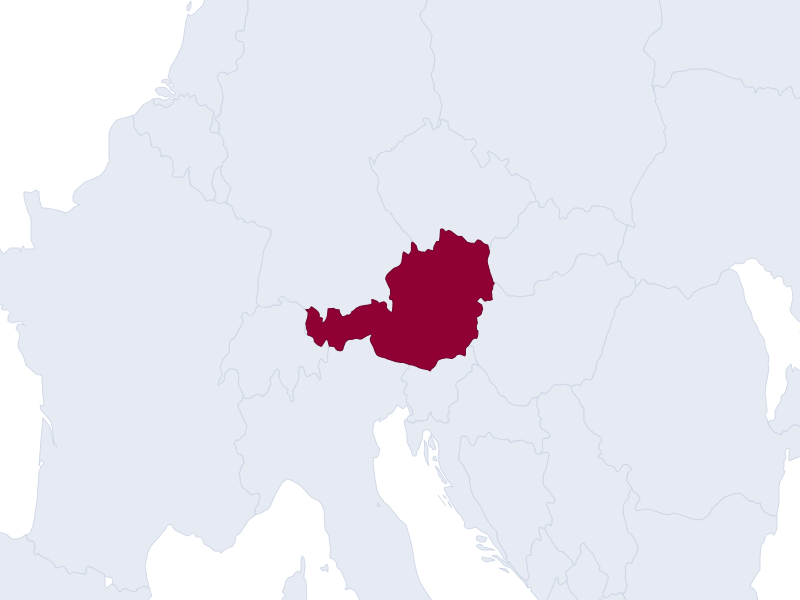
What a repatriation from Austria costs
Austria prices in the Europe, 2 to 4 hours band. The range alongside is bed to bed and all in, covering the ground ambulance at both ends, the UK receiving bed and clinical handover, crew, equipment and oxygen, the seat block or stretcher, handling, landing and permits, the escort return travel and case management. Nothing here is a flight price with extras to follow.
£3,000to£25,000
From a medical escort in an economy seat to an air ambulance, bed to bed and all in.
Figures as at August 2026, from a blend of actual UCS Assist cases and supplier ranges. Ranges are wide because cases are not alike. The full bed-to-bed cost breakdown prices each mode of transport, sets out what moves a case up its band and shows how to sense-check a quote.
Common questions
How does Austria differ from Switzerland for a British patient?
Chiefly in who pays. A UK GHIC gives access to the Austrian state system on the same basis as an insured resident, whereas it is not accepted in Switzerland for most UK visitors. The mountains, the injuries and the retrieval problem are near identical. The exposure is materially lower, which is why an insurer should treat these as two different corridors even though a skier would not.
So is a ski case in Austria fully covered?
No, and this is where people are caught out. The card reaches hospital treatment in the state system. Mountain rescue and helicopter transport are billed separately by the organisation that performed them and are not covered by it. Nor are the private supplementary charges that arise if the patient is admitted to a private room or under a private consultant, which happens more often than visitors realise. A case can be largely covered and still generate two or three unexpected accounts.
What actually drives the timeline on a ski case?
The ground legs, not the flight. Retrieval is often by helicopter to a valley hospital that is entirely competent but a substantial road journey from Innsbruck or Salzburg in winter conditions. Two hours in the air is the easy part. Build the plan bed to bed rather than around a departure slot, or it will slip at the first mountain pass.
Why is head injury treated so cautiously here?
Because the volume of it is high and the pressure to move quickly is also high. A patient who is alert and oriented on the ward can still be some way from being fit for the cabin altitude of a commercial flight, and the interval between those two states is a clinical judgement against that patient's trajectory. Austrian units see a great deal of this and will give a clear view. What matters is that a UK clinician who is accountable reads it, and reassesses if anything changes before departure.
Is there a summer season worth planning for?
Yes, and it is busier than most people assume. Hiking, via ferrata, canyoning and mountain biking generate their own trauma in the same terrain with the same retrieval characteristics, in a visitor population that is often older than the winter one. Planning this corridor as four months of the year leaves half the caseload unplanned.
How quickly can a repatriation be arranged?
Once the patient is fit to travel, usually within 24 to 48 hours. Winter charter capacity into the Alpine airports is good, and where scheduled stretcher space is tight, routing via Munich often solves it at the cost of a longer road leg.
Other corridors
Managing a case in Austria?
Our clinical and operational teams are available around the clock. If the case is live, call rather than email.