

Medical repatriation from Kenya
Kenya has the best developed bush retrieval network in Africa and some of the longest distances to use it over. The patient is often further from a road than from an airstrip, which changes the order of the plan.
8.5 to 9 hours direct from Nairobi, overnight and with only a small time difference
No reciprocal arrangement. Insured visitors are managed in the private hospitals in Nairobi and Mombasa and billed privately from the first hour
What we typically see from Kenya
- Safari and bush injury, where the patient may be hours from a road and the retrieval is by air
- Road traffic trauma, including on the long transfers between Nairobi, the Rift Valley and the Mara
- Cardiac events and strokes in older visitors on safari itineraries, at altitude and a long way from intervention
- Severe gastrointestinal and febrile illness including malaria, which can deteriorate quickly and is easily misread early
- Diving and watersports injury on the coast around Diani, Watamu and Malindi
- Injury and illness among aid, mission and NGO staff on longer postings upcountry
The retrieval network is good, the distances are large
Kenya is unusual among the corridors we run in having a genuinely well developed air retrieval infrastructure. There are established operations covering the safari circuit, flying from bush airstrips into Nairobi, and camps generally know which strip serves them and how to summon help.
That is a real advantage and it should not be taken for granted, because the alternative in much of the region is a very long drive.
What varies is everything at the edges. Camps differ enormously in what medical support they actually hold, from a doctor and a well equipped clinic to a first aid kit and a satellite phone. The ground leg from the camp to the airstrip can be short or can be an hour of rough track. And most bush strips are unlit, so a patient who deteriorates in the late afternoon may be waiting until morning with whatever is to hand.
The first call on a bush case should therefore establish three things before anything clinical: exactly where the patient is, what the camp holds, and how much daylight remains.
Nairobi is the destination, not the UK
For an insured visitor the sequence on any serious case is bush to Nairobi, then treatment, then a decision about home.
The main private hospitals in Nairobi represent the deepest capability in East Africa. They are accustomed to receiving retrieval cases, they deal with international insurers routinely, and they manage the overwhelming majority of what this corridor produces. A patient who has been retrieved, stabilised and treated there is usually in the right place.
Which makes the repatriation question the usual one rather than an urgent one: does the ongoing pathway need to be in the UK? Rehabilitation over weeks, staged surgery, continuity with a consultant who knows the patient, or a family situation that cannot hold. Those are good reasons. Discomfort with an open case abroad is not.
Fever is the thing to get right
Every corridor has a clinical trap and here it is malaria.
It can deteriorate fast, it is easily attributed to something more ordinary on the first day, and it does not respect the assumption that a patient with a fever after a nice safari has picked up a stomach bug. The consequence of missing it is severe, and it compounds if the patient is then flown home to a UK unit that also does not think of it immediately.
Any fitness to fly assessment on this corridor should establish explicitly whether malaria has been considered and excluded, and how. That is a question a UK clinician who is accountable for the transfer should be asking the treating team directly rather than inferring from a discharge summary.
Several accounts, not one
A bush case generates a distinctive commercial shape and it is worth anticipating.
There is the camp or clinic that provided initial care. There is the retrieval flight, which is a substantial chargeable service, usually arranged at short notice, frequently before anyone has spoken to an insurer. There is the Nairobi hospital. And there is the repatriation itself.
A guarantee of payment that contemplates only the hospital will need extending under time pressure. Issue it fast so nothing stalls, scope it so the pathway stays visible, and expect to extend it deliberately rather than reactively, as set out in who actually pays, and when.
Before the patient moves
Fitness to travel is assessed against the patient’s actual trajectory by a UK clinician who is accountable for it, and revisited if the picture changes. The UK receiving bed is secured before departure, matched to the consultant and the pathway rather than to the arrival airport. The clinical record reaches the receiving team ahead of the patient, and ground transfers at both ends are arranged and briefed.
Every decision is recorded in Atlas as it is made. For the general picture see medical repatriation and patient transport, and for the other African corridor where the bush leg comes first, medical repatriation from South Africa.
Where we stage from
The airport a case leaves from is a clinical decision as much as a logistical one, and it is set by where the patient is and what they can tolerate on the ground.
- Nairobi Jomo Kenyatta (NBO): the deepest capability in East Africa and the only realistic international departure point
- Mombasa (MBA): the coast, usually with a domestic leg to Nairobi before the international sector
- Bush airstrips across the Mara, Laikipia, Samburu and Amboseli: the actual origin of most safari cases
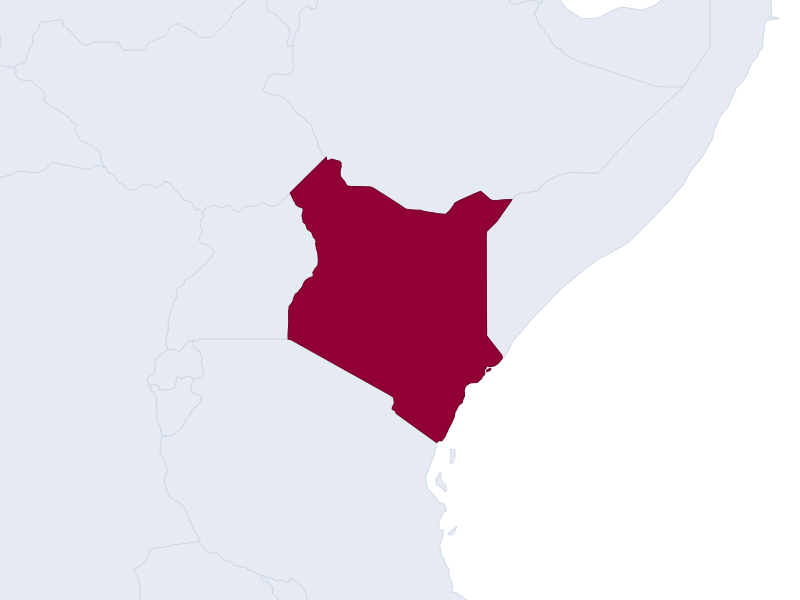
What a repatriation from Kenya costs
Kenya prices in the Medium haul, 5 to 8 hours band. The range alongside is bed to bed and all in, covering the ground ambulance at both ends, the UK receiving bed and clinical handover, crew, equipment and oxygen, the seat block or stretcher, handling, landing and permits, the escort return travel and case management. Nothing here is a flight price with extras to follow.
£5,000to£30,000
From a medical escort in an economy seat to an air ambulance, bed to bed and all in.
At 8.5 to 9 hours Nairobi sits at the top of the band, and the overnight routing can push a stretcher case into long-haul pricing.
Figures as at August 2026, from a blend of actual UCS Assist cases and supplier ranges. Ranges are wide because cases are not alike. The full bed-to-bed cost breakdown prices each mode of transport, sets out what moves a case up its band and shows how to sense-check a quote.
Common questions
How does a patient get out of the bush?
By air, and the network for it is genuinely well developed. Kenya has established air retrieval operations covering the safari circuit, flying from bush airstrips to Nairobi, and camps are generally clear about which airstrip serves them. What varies enormously is what medical support the camp itself holds and how long the ground leg to the airstrip takes. Daylight is the usual constraint, since many bush strips are unlit, so a late afternoon deterioration may mean an overnight wait with whatever the camp can provide.
Is the hospital care in Nairobi adequate?
The main private hospitals in Nairobi are the deepest capability in East Africa and are used to receiving retrieval cases and dealing with international insurers. They handle the overwhelming majority of what this corridor produces. That is why the usual sequence is bush to Nairobi, stabilise and treat, then repatriate if the ongoing pathway genuinely belongs at home rather than because the patient is abroad.
What should we watch for clinically?
Malaria, in any patient with a fever, and it is the single most important thing not to anchor away from. It can deteriorate quickly, it is easily attributed to something more mundane in the first day, and a returning traveller who flies home with untreated malaria is a serious problem for a receiving UK unit that may not think of it either. Any fitness to fly assessment on this corridor should establish explicitly whether malaria has been excluded and how.
How should the payment position be handled?
Early and scoped. There is no reciprocal arrangement, care is private from the first minute, and an air retrieval is a substantial chargeable service arranged at short notice, frequently before anyone has spoken to the insurer. Expect at least three accounts on a bush case: the camp or clinic, the retrieval flight, and the Nairobi hospital. A guarantee of payment that contemplates only the hospital will need extending under pressure.
Does the overnight sector help?
It does. Eight and a half to nine hours with only a small time difference is one of the gentler long-haul propositions, and an overnight departure delivers a morning arrival into a fully staffed UK receiving unit. Sector length still changes the assessment in the usual ways, but this corridor is more forgiving than Bangkok or Cancun.
How quickly can a repatriation be arranged?
Once the patient is in Nairobi and fit to travel, usually two to three days. Scheduled stretcher capacity out of Nairobi is reasonable and needs booking. The unpredictable element is the bush leg at the front, which depends on the camp, the airstrip and the daylight.
Other corridors
Managing a case in Kenya?
Our clinical and operational teams are available around the clock. If the case is live, call rather than email.