
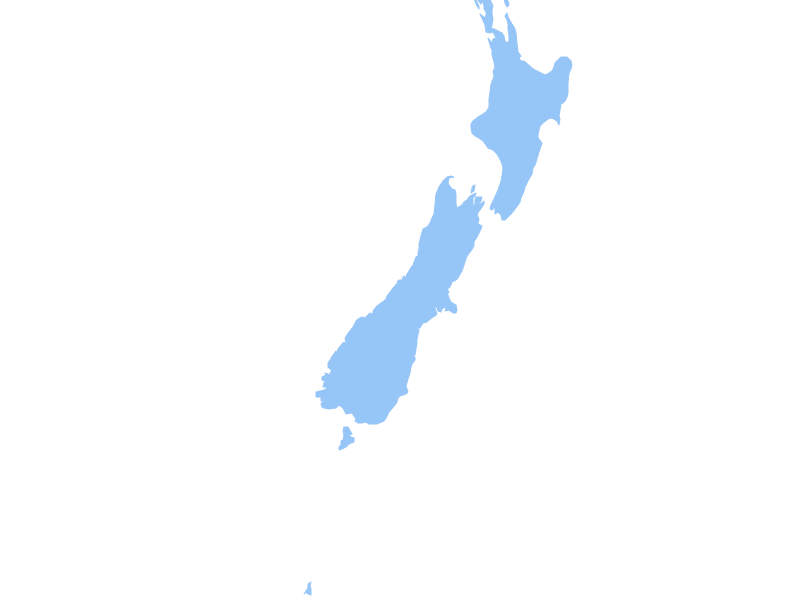
Medical repatriation from New Zealand
New Zealand covers visitors for accidental injury under a national scheme, which surprises most insurers. It does not cover illness, and it does not shorten a journey home that is the longest we run.
24 to 26 hours with at least one stop, and no direct option
No reciprocal arrangement for illness. The Accident Compensation Corporation scheme does cover visitors for treatment of accidental injury, which is a genuine and widely missed distinction
What we typically see from New Zealand
- Adventure sport injury, including skiing, mountain biking, canyoning, bungee and skydiving, at a scale no other corridor matches
- Road trauma on long touring and campervan itineraries, often on rural roads far from a base hospital
- Tramping and backcountry injury, where retrieval is by helicopter and the patient may be a day from a road
- Cardiac events and strokes in older visitors on extended trips and in the visiting friends and relatives population
- Earthquake and severe weather related injury, infrequent but planned for
- Deterioration of chronic disease in long-stay visitors, many of whom are three months into a trip
The scheme nobody expects
New Zealand runs a no-fault accident compensation scheme that extends to visitors, and it is the most commonly missed fact about this corridor.
A British traveller injured on a ski field, in a road accident or falling off a mountain bike generally has their treatment costs covered under it. Not their illness: a stroke, a cardiac event or an infection sits entirely outside the scheme. And not, under any circumstances, their journey home.
That produces an exposure profile unlike anywhere else we work. On most corridors the hospital account is the thing to manage and the transport is a known quantity. Here the treatment side of an injury case is largely handled by the scheme, and the entire exposure concentrates into a repatriation that is long, multi-sector and expensive.
The practical consequence for an insurer is that the cost conversation on this corridor is almost entirely about the transport decision. There is very little to review on the bill and a great deal riding on whether the patient needs to move at all, and if so, how.
The longest journey we run
There is no direct flight. Twenty-four to twenty-six hours with at least one stop, and more if a domestic leg from Queenstown or Christchurch comes first.
Everything about a long sector is amplified. Oxygen is planned across multiple sectors and the transits between them. Immobility runs into a second day. An escort cannot remain effective across the whole journey without relief being planned rather than hoped for. Each transit is a clinical event with a handover, not a gap in the itinerary. And for long stretches there is no useful diversion at all.
A patient who is comfortably fit for a two hour European sector may be weeks from being fit for this one, and the assessment has to be made against the actual itinerary rather than against the idea of a flight.
Which is why staying is often right
Put those two facts together and this becomes the corridor where the honest answer is most often to leave the patient where they are.
New Zealand hospitals are excellent. Injury treatment is largely covered. The journey is punishing. There is no clinical deficit to correct by moving someone, and considerable risk in doing it early.
The reasons that genuinely justify a repatriation are the familiar ones: rehabilitation over months that belongs near home, staged reconstruction, continuity with a UK consultant, or a family and social situation that cannot be sustained at twelve thousand miles. Those should be recorded as the reasons. Discomfort with an open case is not one, and the same argument is set out on the Australia corridor, where it applies almost as strongly.
Adventure sports, and the backcountry
New Zealand sells adventure at a scale no other corridor matches, and the caseload reflects it: skiing, mountain biking, canyoning, bungee, skydiving, white water.
Most produce ordinary trauma in young, fit patients. What complicates them is where they happen. A tramper on a multi-day track may be a long way from a road, retrieval is by helicopter, and mountain weather closes flying quickly and without much notice.
Read these as three journeys: backcountry to a regional hospital, regional to Auckland or Christchurch, and only then the international leg. Each has its own handover and its own constraints, and the international planning cannot sensibly begin until the second is done.
Before the patient moves
Fitness to travel is assessed against the patient’s actual trajectory by a UK clinician who is accountable for it, and revisited if the picture changes. The UK receiving bed is secured before departure, matched to the consultant and the pathway rather than to the arrival airport. The clinical record reaches the receiving team ahead of the patient, and ground transfers at both ends are arranged and briefed.
Every decision is recorded in Atlas as it is made. For the general picture see medical repatriation and patient transport, and for the neighbouring corridor with a reciprocal agreement and a slightly shorter journey, medical repatriation from Australia.
Where we stage from
The airport a case leaves from is a clinical decision as much as a logistical one, and it is set by where the patient is and what they can tolerate on the ground.
- Auckland (AKL): the widest capability and the best connections, and the usual staging point for any repatriation
- Christchurch (CHC): the South Island, the adventure catchment and a major trauma centre
- Wellington (WLG) and Queenstown (ZQN): usually a domestic leg before anything international
- Singapore (SIN), Dubai (DXB) and Doha (DOH): the realistic hub stops, and where a case can be broken if needed
What a repatriation from New Zealand costs
New Zealand prices in the Long haul, 9 hours plus band. The range alongside is bed to bed and all in, covering the ground ambulance at both ends, the UK receiving bed and clinical handover, crew, equipment and oxygen, the seat block or stretcher, handling, landing and permits, the escort return travel and case management. Nothing here is a flight price with extras to follow.
£8,000to£75,000
From a medical escort in an economy seat to an air ambulance, bed to bed and all in.
Figures as at August 2026, from a blend of actual UCS Assist cases and supplier ranges. Ranges are wide because cases are not alike. The full bed-to-bed cost breakdown prices each mode of transport, sets out what moves a case up its band and shows how to sense-check a quote.
Common questions
Does the accident compensation scheme really cover visitors?
It does, for treatment of accidental injury, and it is the single most commonly missed fact on this corridor. New Zealand operates a no-fault accident compensation scheme that extends to visitors, so a British traveller injured skiing or in a road accident generally has their treatment costs covered under it. Two limits matter enormously. It covers injury, not illness, so a stroke or a cardiac event is outside it entirely. And it does not cover repatriation, which on a corridor with a twenty-four hour journey home is by far the largest line.
So what is an insurer actually exposed to?
Chiefly the journey, and any illness-based case. That is an unusual shape. On most corridors the hospital account is the concern and the transport is a known quantity. Here the treatment side of an injury case is largely handled, and the exposure is concentrated in a repatriation that is long, multi-sector and expensive. It means the cost conversation on this corridor is almost entirely about transport decisions rather than about bill review.
How long is the journey home really?
Twenty-four to twenty-six hours with at least one stop, and there is no direct option. Add a domestic leg from Queenstown or Christchurch and it is longer. That is the most demanding transport proposition of any corridor we run: oxygen planned across multiple sectors and transits, prolonged immobility, an escort who cannot remain effective across the whole journey without relief planned for, and transits that are clinical events rather than gaps in the plan.
Should the patient come home at all?
Frequently not, and this is the corridor where staying put is most often correct. New Zealand hospitals are excellent, the injury treatment is largely covered, and the journey is punishing. The argument for moving is the pathway: rehabilitation over months, staged reconstruction, continuity with a UK consultant, or a family situation that cannot be sustained at that distance. Moving a recovering patient twenty-six hours to close a file is a clinical risk taken for an administrative reason.
What about backcountry cases?
Retrieval is by helicopter and the service is genuinely good, but a tramper on a multi-day track can be a long way from a road and weather in the mountains closes flying quickly. The first move is to a regional hospital, the second to Auckland or Christchurch, and only then does the international planning begin. Read these cases as three journeys, not one.
How quickly can a repatriation be arranged?
Once the patient is genuinely fit, typically three to five days. Stretcher space across multiple sectors has to be aligned, escorts positioned and relieved, and the receiving bed held for an arrival two days after departure. This is a corridor where planning time is not wasted time.
Other corridors
Managing a case in New Zealand?
Our clinical and operational teams are available around the clock. If the case is live, call rather than email.