
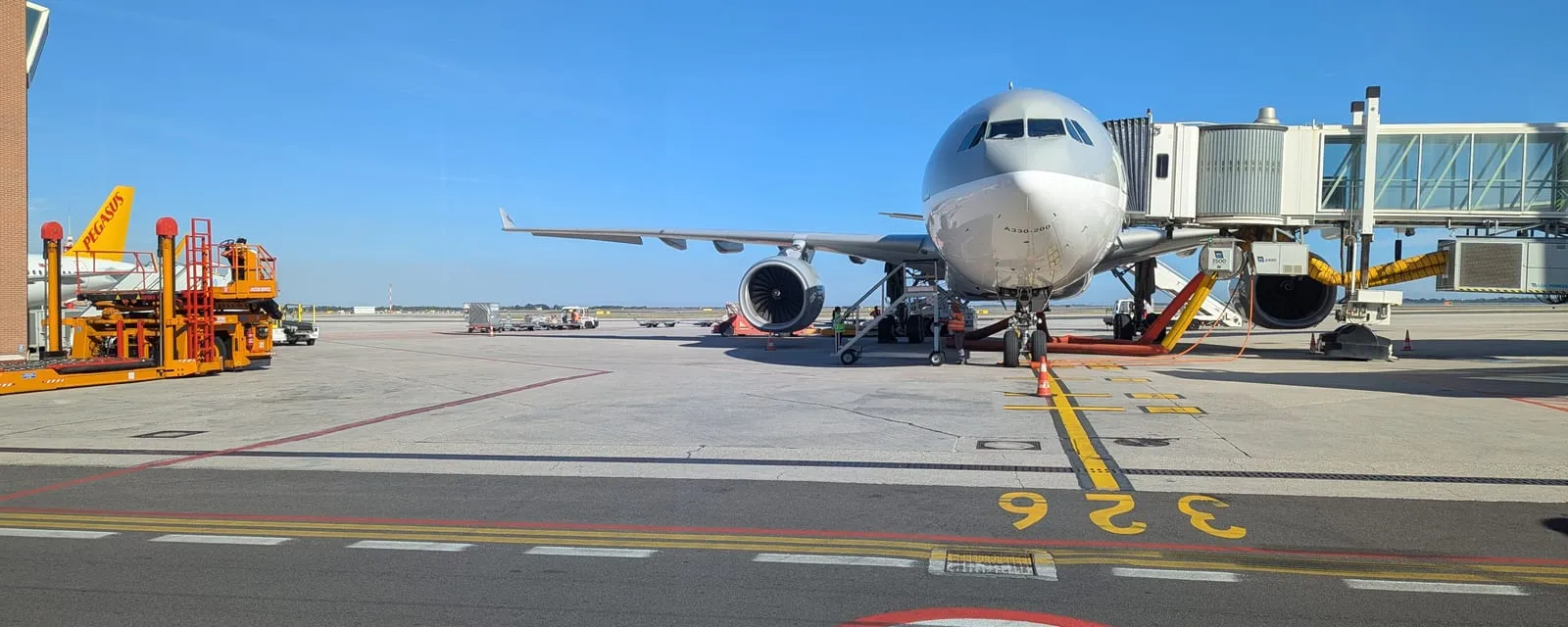
Medical repatriation from Turkey
Turkey is two corridors wearing one name. The holiday cases look like Spain. The medical tourism cases look like nothing else, and they are the ones that go wrong.
4 to 4.5 hours from the Turkish Riviera and Istanbul
No. A GHIC has no standing in Turkey, and neither does an EHIC
What we typically see from Turkey
- Complications of elective surgery undertaken privately: bariatric leaks and sepsis, abdominoplasty and BBL complications, dental and hair transplant infections
- Post-operative patients who have been discharged to a hotel rather than kept in, and deteriorate there
- Road traffic and moped injuries in the Antalya, Bodrum and Marmaris resort corridors
- Cardiac events and strokes in the summer visitor population
- Cases where no UK clinician has ever seen the operative record, because there is not one in English
One country, two entirely different case loads
Turkey generates two kinds of repatriation case, and treating them as one is how insurers get caught out.
The first is the holiday case. Road traffic and moped injuries around Antalya, Bodrum and Marmaris, cardiac events in the summer visitor population, the usual seasonal trauma of a large resort economy. Clinically these behave much like Spanish cases on a longer sector.
The second is the medical tourism case, and it is unlike anything else in the international assistance book.
Why elective complications are the hardest cases we see
A member travels to Turkey specifically to have an operation: bariatric surgery, abdominoplasty, a hair transplant, dental implants, a Brazilian butt lift. The surgery happens. They are discharged to a hotel rather than kept in a ward, because that is the model. Somewhere between day three and day seven, something goes wrong.
By the time an assistance company hears about it, several things are true at once:
- The patient has had real surgery with real anatomy changed, and often cannot say precisely what was done.
- There is frequently no operative note in English, and sometimes no operative note the patient can access at all.
- They are in a hotel room, not a ward, so nobody has been observing them.
- The clinical deterioration is post-operative, which means the differential is narrow, serious and time-critical: anastomotic leak, sepsis, haemorrhage, deep infection.
- The coverage position is often unclear, because most policies exclude treatment the member travelled to receive.
That combination is genuinely difficult, and it is not difficult in a way that logistics solves. It needs a clinician who can assess a post-operative patient at distance, work out what information is missing, and decide whether moving them is safe.
Stabilise first, then move
The pressure in these cases is always to bring the patient home immediately. Sometimes that is exactly wrong.
A septic patient with an untreated surgical source is not made safer by putting them at 8,000 feet of cabin altitude for four hours. Source control may need to happen in Turkey before flight is survivable, and the clinically correct answer is often to fund appropriate treatment locally, get the patient stable, and then repatriate to a receiving surgical unit that knows what it is receiving.
That decision is made by a UK clinician who is accountable for it, documented with the rationale, and revisited as the picture changes. It is not made by whoever is loudest on the call.
The coverage question, answered early
Whether the policy responds is not our decision, but the answer changes how the case runs, so we establish it in the first hour rather than the first week. Most travel and IPMI wordings exclude treatment the member travelled specifically to receive and complications arising from it.
Where cover is declined, the member still needs clinically safe advice and a route home, and we will say so plainly rather than disengage. Where cover responds, knowing that early means treatment authorisation and guarantees of payment can be issued with defined scope before costs run.
The transport picture
Four to four and a half hours from the Turkish coast is a middle-distance sector. It is comfortably within commercial stretcher range on scheduled services out of Antalya, Istanbul, Dalaman and Bodrum, and airline capacity through the season is reasonable.
The mode decision turns on the clinical picture, as always. A stable post-operative patient with a drain and a wound to manage travels well on a stretcher with an escort. A ventilated or haemodynamically unstable patient needs a dedicated air ambulance, and on this corridor that is a decision worth making quickly rather than deliberating over, because the alternative is a long ground wait in a facility that may not have the intensive care depth you would want.
What the receiving team needs
The single most valuable thing we do on a Turkish medical tourism case is arrive at the UK receiving unit with information rather than a patient and a shrug. That means the operative detail where we can obtain it, an honest statement of what could not be obtained, the imaging, the microbiology, the drug chart, and a clinical narrative of the deterioration.
We secure the UK bed before departure, matched to the surgical specialty the patient actually needs, which for a bariatric complication is not simply the nearest hospital to the arrival airport. Every clinical decision is recorded in Atlas as it is made.
For how we run repatriations generally, see medical repatriation and patient transport. For the wider argument on clinical leadership in these cases, see clinically led, not clinically staffed.
Where we stage from
The airport a case leaves from is a clinical decision as much as a logistical one, and it is set by where the patient is and what they can tolerate on the ground.
- Antalya (AYT): the largest resort catchment and the main medical tourism hub for the south coast
- Istanbul (IST) and Sabiha Gökçen (SAW): tertiary centres, widest airline stretcher availability, most elective surgery volume
- Dalaman (DLM) and Bodrum (BJV): Aegean resort corridor, seasonal capacity
- İzmir (ADB): western Anatolia and the Çeşme corridor
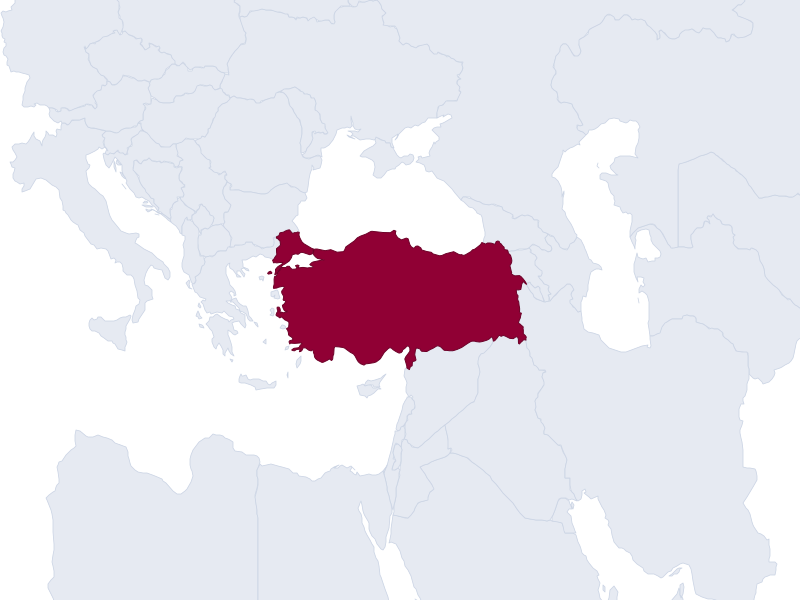
What a repatriation from Turkey costs
Turkey prices in the Europe, 2 to 4 hours band. The range alongside is bed to bed and all in, covering the ground ambulance at both ends, the UK receiving bed and clinical handover, crew, equipment and oxygen, the seat block or stretcher, handling, landing and permits, the escort return travel and case management. Nothing here is a flight price with extras to follow.
£3,000to£25,000
From a medical escort in an economy seat to an air ambulance, bed to bed and all in.
At 4 to 4.5 hours Turkey sits at the top of this band.
Figures as at August 2026, from a blend of actual UCS Assist cases and supplier ranges. Ranges are wide because cases are not alike. The full bed-to-bed cost breakdown prices each mode of transport, sets out what moves a case up its band and shows how to sense-check a quote.
Common questions
Does travel insurance cover complications of surgery I chose to have in Turkey?
Usually not, and this is the single most important thing to establish early. Most travel and IPMI policies exclude treatment the member travelled specifically to receive, and complications arising from it. That is a coverage question for the insurer rather than a clinical one, but it changes everything about how the case is handled, so it needs answering in the first hour rather than the first week.
Why are medical tourism cases clinically harder than holiday cases?
Because the clinical picture starts with a deliberate injury nobody in the UK has records of. The patient has had a real operation with real anatomy changed, often without an operative note in English, sometimes without knowing what was actually done. A bariatric leak or a post-abdominoplasty infection presenting five days later is a serious surgical problem being assessed with almost none of the information a UK surgeon would normally have.
How quickly should someone with a post-operative complication be moved?
It depends entirely on whether they are stable and on what the receiving pathway needs to be. A septic post-bariatric patient may need source control before they can safely fly at all, and moving them early can be actively dangerous. The right sequence is to stabilise, get the operative detail, then move. Our clinicians assess the trajectory rather than the snapshot.
Can you get the operative records?
We try, and we are usually more successful than a family is, because the request comes from a clinician. Where records genuinely cannot be obtained, we say so and the receiving team plans on that basis rather than on an assumption. A receiving surgeon told honestly that there is no operative note will plan differently, and safely.
Is a GHIC any use in Turkey?
No. Turkey is outside the GHIC and EHIC schemes entirely. There is no reciprocal arrangement, treatment is chargeable from the outset, and hospitals will typically require a guarantee of payment or a deposit before proceeding.
Do you handle repatriation of remains from Turkey?
Yes, including the documentation, mortuary liaison and consular requirements. It is a distinct process with its own timescales and paperwork, and it is worth calling early rather than late.
Other corridors
Managing a case in Turkey?
Our clinical and operational teams are available around the clock. If the case is live, call rather than email.