

Medical repatriation from Sri Lanka
Sri Lanka is a small island that takes a long time to cross. Most of the caseload is on a touring itinerary, and the distance between the patient and Colombo is measured in hours of road rather than kilometres.
11 to 12 hours direct from Colombo, longer with a Gulf connection
No reciprocal arrangement. The state system will treat an emergency, but insured visitors are generally managed in the private hospitals in Colombo and billed privately
What we typically see from Sri Lanka
- Road traffic trauma, including tuk tuk and motorcycle incidents, on a corridor where road travel dominates the itinerary
- Surf trauma on the south and east coasts, including cervical spine injury and reef lacerations
- Cardiac events and strokes in older visitors on touring holidays, often several hours from Colombo
- Severe gastrointestinal illness, dengue and other febrile illness requiring admission
- Injury on hill country excursions, including falls at Ella and Adam's Peak and safari vehicle incidents
- Deterioration of chronic disease in long-stay visitors, including on extended wellness and ayurvedic stays
A small island that takes a long time to cross
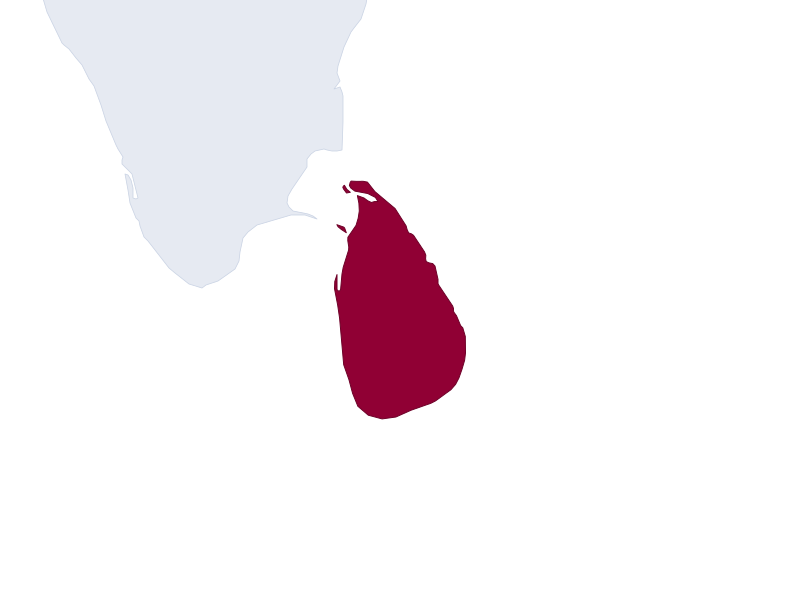
Sri Lanka is about the size of Ireland, and that comparison misleads anyone planning a case here.
The classic itinerary moves visitors around the country: Colombo, then the cultural triangle, then the hill country, then a beach on the south or east coast. At most points on that circuit the patient is many hours by road from Colombo, on roads that are slow rather than dangerous, and internal air options are limited.
So the practical geography of this corridor is not the distance to the UK. It is the distance to Colombo, and it is the part of the plan most often underestimated. A case that looks like a two hundred kilometre transfer is a full day’s work, and building a repatriation timeline that assumes otherwise loses a day at the first attempt.
Capability sits in one city
For an insured visitor, the country’s real medical capability is the private hospital sector in Colombo. Those hospitals are accustomed to foreign patients, they deal with international insurers routinely, and they manage most of what this corridor produces.
Outside Colombo, regional and district hospitals will stabilise a patient competently. They are not equipped for complex trauma, neurosurgery or interventional cardiology, and expecting otherwise does them a disservice and the patient a worse one.
Every serious case therefore has two moves in it: get the patient to Colombo, then get them home. The first is a distinct event with its own cost, its own clinical handover, and often its own improvised arrangement, since the transfer may be organised by a hotel or a tour operator rather than by anyone with a contract or a clinical brief. Someone needs to own it.
Roads, and what happens on them
Road traffic trauma is the largest single category here, and it reflects how people travel: long transfers by car and van, tuk tuks in the towns, hired motorcycles on the coast.
The injuries are ordinary trauma. What is not ordinary is the interval between the injury and definitive care, which on a rural route can be substantial. That affects what the receiving team in Colombo is dealing with, and it affects the fitness to fly assessment afterwards, because a patient whose definitive treatment was delayed is frequently further from being ready to travel than the operation note alone suggests.
The wellness caseload
Extended ayurvedic and wellness stays are a genuine part of this corridor and worth understanding rather than dismissing.
The patients are often older, frequently managing chronic conditions, and a proportion have reduced or paused conventional medication as part of a programme. That is not a judgement about the practice. It is a clinical fact that changes the picture in front of you and it is not always volunteered, so it is worth asking directly what the patient has actually been taking and for how long.
Eleven hours, or twelve with a stop
For a stable patient a commercial stretcher or seated medical escort remains the appropriate and far cheaper answer. The sector changes the arithmetic in the familiar ways: oxygen across a full duty period, prolonged immobility, infusions managed throughout, escort fatigue, limited diversion.
Staging through a Gulf hub is worth weighing where the patient is stable but marginal for a direct sector. It breaks the journey, and it puts real hospital capability underneath the plan if they deteriorate. Where the patient is comfortably fit, it adds a transfer and a handover for nothing. That is a judgement about this patient rather than a policy, and it is the same one set out on the Indonesia corridor.
Before the patient moves
Fitness to travel is assessed against the patient’s actual trajectory by a UK clinician who is accountable for it, and revisited if the picture changes. The UK receiving bed is secured before departure, matched to the consultant and the pathway rather than to the arrival airport. The clinical record reaches the receiving team ahead of the patient, and ground transfers at both ends are arranged and briefed.
Every decision is recorded in Atlas as it is made. For the general picture see medical repatriation and patient transport, and for the neighbouring corridor with a comparable sector and deeper local capability, medical repatriation from India.
Where we stage from
The airport a case leaves from is a clinical decision as much as a logistical one, and it is set by where the patient is and what they can tolerate on the ground.
- Colombo Bandaranaike (CMB): effectively the only international departure point, and where the private hospitals are
- Mattala (HRI): occasionally usable for the deep south, with very limited scheduled service
- Dubai (DXB) and Doha (DOH): common connection points, and a stabilisation option where a direct sector is too much
What a repatriation from Sri Lanka costs
Sri Lanka prices in the Long haul, 9 hours plus band. The range alongside is bed to bed and all in, covering the ground ambulance at both ends, the UK receiving bed and clinical handover, crew, equipment and oxygen, the seat block or stretcher, handling, landing and permits, the escort return travel and case management. Nothing here is a flight price with extras to follow.
£8,000to£75,000
From a medical escort in an economy seat to an air ambulance, bed to bed and all in.
Figures as at August 2026, from a blend of actual UCS Assist cases and supplier ranges. Ranges are wide because cases are not alike. The full bed-to-bed cost breakdown prices each mode of transport, sets out what moves a case up its band and shows how to sense-check a quote.
Common questions
Where should a seriously ill patient be treated?
Colombo. The private hospitals there are the country's real capability for an insured visitor, they are used to treating foreigners and dealing with international insurers, and they handle most of what this corridor produces. Regional and district hospitals will stabilise a patient competently and are not equipped for complex trauma, neurosurgery or interventional cardiology. Getting the patient to Colombo is therefore the first move on any serious case, and it is frequently the longest part of the whole journey home.
How long do internal transfers actually take?
Far longer than the distance implies. Sri Lanka is roughly the size of Ireland, and a road journey from the east coast or the hill country to Colombo can take six to eight hours or more, on roads that are slow rather than dangerous. Air transfer options within the country are limited. Planning an internal transfer on the assumption that a couple of hundred kilometres means a couple of hours is the most common way a case here loses a day.
What about the ayurvedic and wellness caseload?
It is a real category on this corridor and it produces two distinct issues. Patients on extended wellness stays are often older, sometimes with chronic conditions they are managing rather than curing, and occasionally they have reduced or stopped conventional medication as part of a programme. Establishing what the patient has actually been taking, and for how long, is a question worth asking directly and early, because it changes the clinical picture and it is not always volunteered.
Is a Gulf stop worth considering?
Sometimes, and it is worth weighing rather than defaulting. A direct sector is eleven to twelve hours. Where a patient is stable but marginal for that, staging through a Gulf hub with genuine hospital capability breaks the journey and provides a fallback if they deteriorate en route. Where the patient is comfortably fit, the stop adds a transfer, a handover and cost for no clinical gain.
How should the payment position be handled?
Early and scoped, as on every wholly private corridor. There is no reciprocal arrangement and the private hospitals have no relationship with the payer, so a confirmed guarantee is what keeps the case moving. Anticipate that an internal transfer and a Colombo admission are two separate accounts, and that the transfer may be arranged by the hotel or the tour operator rather than by anyone with a contract.
How quickly can a repatriation be arranged?
Once the patient is in Colombo and fit to travel, usually two to three days. Scheduled stretcher capacity out of Colombo needs booking rather than assuming. The variable is nearly always the internal transfer that precedes it.
Other corridors
Managing a case in Sri Lanka?
Our clinical and operational teams are available around the clock. If the case is live, call rather than email.