

Medical repatriation from Bahrain
Bahrain is small enough that everything is thirty minutes away, which removes the ground problem that dominates most corridors and leaves a clean clinical decision.
7 to 7.5 hours direct from Bahrain, with reliable scheduled capacity and easy connections through the wider Gulf
No reciprocal healthcare arrangement. Treatment is chargeable, and employer-sponsored cover is common among expatriate residents and worth confirming before assuming a private payer
What we typically see from Bahrain
- Cardiac events in the expatriate professional population and among visiting business travellers
- Road traffic trauma, including on the causeway and the arterial routes
- Industrial injury from the refining, aluminium and marine sectors
- Heat illness through the summer months, which are severe and humid
- Deterioration of chronic disease in visiting relatives of expatriate residents
- Diving and watersport incidents in the Gulf, where recompression access needs establishing rather than assuming
Small island, short distances
Most corridors are shaped by the distance between the patient and the aircraft. Bahrain removes that problem almost entirely.
The island is compact. Any hospital is a short ambulance journey from the airport, the airport itself is uncongested, and handling is competent. The ground legs that quietly consume hours and money on a corridor like Lagos or Bangkok are, here, close to trivial.
What that leaves is an unusually clean clinical decision. Should this patient travel, and in what configuration? Very little else gets in the way, and that is worth knowing when timings are being set.
Good local care, and a regional option
The leading private hospitals handle acute medicine and surgery competently and there is intensive care capability on the island. For most cases that is sufficient, and the question becomes the ordinary one of whether the patient is better completing treatment locally or coming home.
For the most specialised tertiary work the regional picture matters. Bahrain sits inside a cluster of Gulf cities with strong specialist capability, and moving a patient a short distance within the region is sometimes clinically better than either staying put or flying seven hours.
That option gets overlooked by anyone planning the case from a UK desk, where the choice tends to be framed as stay or come home. It is worth putting on the table properly.
The causeway
The King Fahd Causeway connects Bahrain to the Eastern Province of Saudi Arabia by road, in well under two hours.
For most cases it is irrelevant. Occasionally it is not, because it puts a specialist facility within ground-transfer distance that would otherwise require a flight, and a road transfer avoids the physiological load of a sector for a patient who does not need one.
It brings a border crossing and the documentation that comes with it, so it is not a casual option. But it is a genuine one, and it belongs in the assessment rather than being discovered afterwards.
Employer cover shapes the case
A large share of the expatriate population is covered through an employer rather than personally. That determines the payer, frequently determines which hospital the patient was taken to in the first place, and determines who has authority over decisions about moving them.
Establishing that early prevents the common muddle where an employer, an insurer and a family all believe they are running the case.
Heat, and the time of day
Bahraini summers are severe and humid, and humidity makes them harder on a compromised patient than the temperature alone suggests.
Ground movement gets planned around the cooler hours, vehicles and cabins are pre-cooled, and apron time is kept short. On an island where every transfer is brief, this is easy to do well and there is no excuse for doing it badly.
What we do differently here
We put the regional option on the table, because a case that would benefit from specialist care two hours away should not be framed as a choice between staying put and a seven hour flight.
And because the logistics here are genuinely easy, we hold the clinical bar where it should be. On a corridor with no operational excuses, the decision to move a patient has to be justified by the patient, not by the convenience of moving them.
Where we stage from
The airport a case leaves from is a clinical decision as much as a logistical one, and it is set by where the patient is and what they can tolerate on the ground.
- Bahrain (BAH): the single international departure point, compact, well handled and rarely congested
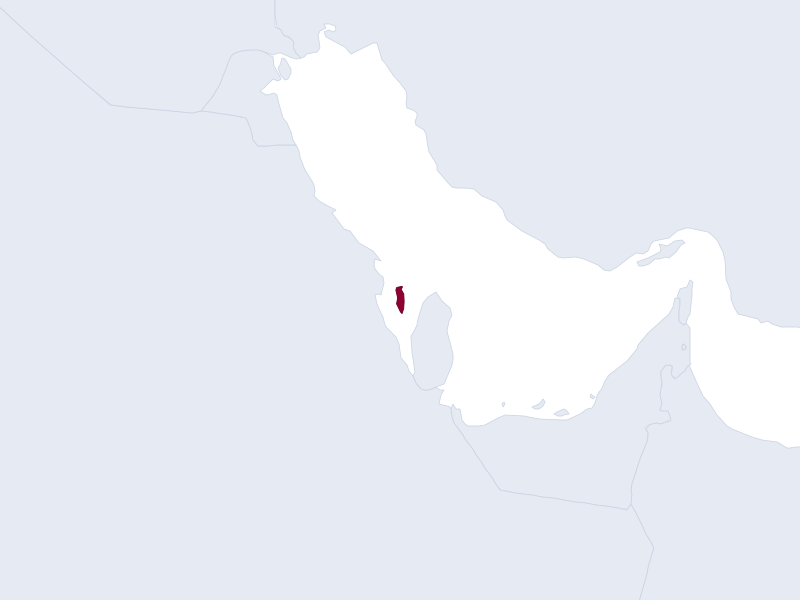
What a repatriation from Bahrain costs
Bahrain prices in the Medium haul, 5 to 8 hours band. The range alongside is bed to bed and all in, covering the ground ambulance at both ends, the UK receiving bed and clinical handover, crew, equipment and oxygen, the seat block or stretcher, handling, landing and permits, the escort return travel and case management. Nothing here is a flight price with extras to follow.
£5,000to£30,000
From a medical escort in an economy seat to an air ambulance, bed to bed and all in.
Figures as at August 2026, from a blend of actual UCS Assist cases and supplier ranges. Ranges are wide because cases are not alike. The full bed-to-bed cost breakdown prices each mode of transport, sets out what moves a case up its band and shows how to sense-check a quote.
Common questions
What makes Bahrain operationally easy?
Its size. The island is small enough that any hospital is a short ambulance journey from the airport, so the ground legs that dominate the bed-to-bed cost and clinical risk on most corridors are close to trivial here. Airport handling is competent and the terminal is not congested. When a patient is fit to travel, moving them is genuinely straightforward, which is not something we can say about many places.
How capable are the hospitals?
The leading private hospitals in Bahrain handle a broad range of acute medicine and surgery competently, and there is intensive care capacity. For the most specialised tertiary work, particularly complex neurosurgery or highly specialist cardiac intervention, cases are sometimes moved within the region rather than managed locally. That regional option is a real part of the picture here and should be considered alongside repatriation, not after it.
Does the causeway to Saudi Arabia matter clinically?
It can. The King Fahd Causeway makes the Eastern Province of Saudi Arabia reachable by road in well under two hours, which occasionally puts a specialist facility within ground-transfer range that would otherwise mean a flight. It is not a default and it introduces a border crossing with its own documentation, but on the right case it is a genuine option and it is routinely overlooked by anyone planning from outside the region.
Does a GHIC cover treatment?
No. There is no reciprocal arrangement between the UK and Bahrain, so all treatment is chargeable. A large share of the expatriate population holds employer-arranged cover, which determines both the payer and often the hospital, so establishing what is in place is the first administrative step on any resident case.
Is a commercial stretcher realistic?
Yes, and on a seven hour sector with good scheduled capacity it is usually the right answer for a stable patient. Where direct capacity does not suit the timing, a short connection within the Gulf onto a wide-bodied service is straightforward and adds little to the journey, unlike a transit on a longer corridor.
How bad is the summer heat?
Severe, and humid with it, which makes it harder to tolerate than a dry heat at the same temperature. For a patient with cardiac or respiratory compromise, ground movement and apron time in July and August are a clinical consideration and should be planned around the time of day rather than the convenience of the schedule.
Other corridors
Managing a case in Bahrain?
Our clinical and operational teams are available around the clock. If the case is live, call rather than email.