

Medical repatriation from Malaysia
People travel to Malaysia for surgery. That single fact should change how any repatriation decision from Kuala Lumpur is framed.
13 hours direct from Kuala Lumpur, plus 2 to 3 hours from Sabah or Sarawak on a domestic leg
No reciprocal healthcare arrangement. Treatment is chargeable, though the private sector is transparent about pricing by regional standards and direct billing is well established
What we typically see from Malaysia
- Road traffic trauma, including a high volume of motorcycle injury, which is the signature mechanism across the peninsula
- Cardiac events in visitors and in the resident expatriate population
- Dengue, which is endemic year-round and produces genuinely critical patients in bad seasons
- Diving injury and decompression illness off Sabah, Sipadan and the east coast islands
- Jungle and adventure trauma in Borneo, where retrieval times are long
- Complications of elective surgery undertaken privately, in patients who travelled specifically for treatment
A country people fly to for treatment
Malaysia sits awkwardly in most repatriation frameworks, because the usual logic does not apply.
The leading private hospitals in Kuala Lumpur and Penang attract patients from across Asia and beyond who travel specifically to be treated there. They handle complex surgery and critical care properly. A British patient admitted to one of them after a road accident is not somewhere that needs escaping.
So the question is not whether the local care is adequate. It usually is. The question is whether being at home would add something the hospital cannot, which is a much narrower case and a much more honest one.
Two countries in one
The peninsula and Borneo are not the same corridor and should not be planned as though they were.
Kuala Lumpur and Penang have strong hospitals, good domestic connectivity and direct capacity to the UK. Sabah and Sarawak have capability concentrated in Kota Kinabalu and Kuching, and beyond those two cities it drops away sharply. Retrieval from the interior or from the dive sites can consume most of a day.
Every Borneo case therefore carries a domestic sector of two to three hours before anything international happens, and that leg has its own clinical requirements. It is not a connection, it is a transfer.
Diving, and the order of operations
The waters off Sabah draw divers from everywhere, and decompression illness follows them.
The rule that matters is simple and gets broken anyway: a patient with unresolved decompression illness does not fly. Cabin pressure will make it worse. The sequence is recompression first, repatriation second, and reversing them causes real harm.
That makes the location and the operational status of the nearest chamber the first thing to establish on any suspected case, not something to confirm once the flight is being discussed. Chambers exist in the region, but availability and staffing vary and cannot be assumed from a map.
Dengue is endemic, not seasonal
Further north dengue arrives in waves. Here it is present year-round, with heavier and lighter periods rather than an on and off switch.
Severe dengue is an intensive care illness, and its danger sits in the phase when the fever settles and plasma leakage begins, which is precisely when a patient can look as though they are improving. Fitness to fly on a dengue case has to be judged against where the illness is going, not against how the patient looked this morning.
Thirteen hours, and why direct matters
From Kuala Lumpur the direct sector to the UK runs around thirteen hours. That is long, and it is still the better option than a shorter journey broken by a transit.
A connection means a second aircraft, a second set of ground handling and a layover, all landing on a patient who is already tired. One long sector with the right escort, oxygen provision and a properly planned rest pattern is easier on the patient than two shorter ones with a gap in between.
What we do differently here
We do not treat the local hospital as the problem to be solved, because on this corridor it usually is not. Where a patient is well placed, we say so, and we look at whether repatriation genuinely improves anything.
And we plan Borneo as a two-stage case from the first call. Treating the domestic sector as a booking rather than a clinical transfer is the single most common way a Malaysian case goes wrong.
Where we stage from
The airport a case leaves from is a clinical decision as much as a logistical one, and it is set by where the patient is and what they can tolerate on the ground.
- Kuala Lumpur (KUL): the international departure point for the country, with direct UK capacity and experienced medical handling
- Penang (PEN): strong private hospital cluster, with a short domestic leg to Kuala Lumpur for a stretcher case
- Kota Kinabalu (BKI) and Kuching (KCH): Borneo, always with a domestic sector before anything international
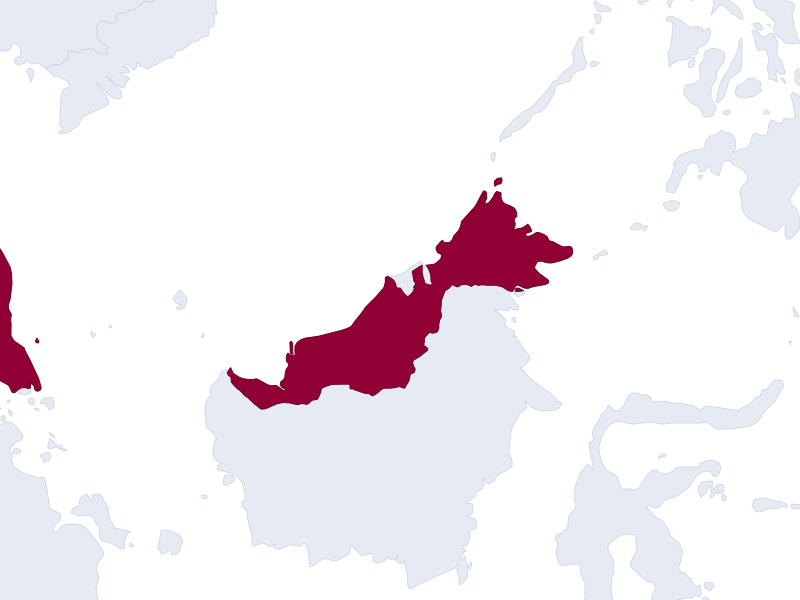
What a repatriation from Malaysia costs
Malaysia prices in the Long haul, 9 hours plus band. The range alongside is bed to bed and all in, covering the ground ambulance at both ends, the UK receiving bed and clinical handover, crew, equipment and oxygen, the seat block or stretcher, handling, landing and permits, the escort return travel and case management. Nothing here is a flight price with extras to follow.
£8,000to£75,000
From a medical escort in an economy seat to an air ambulance, bed to bed and all in.
Sabah and Sarawak add a domestic sector of two to three hours before the international leg, which is not reflected in the band.
Figures as at August 2026, from a blend of actual UCS Assist cases and supplier ranges. Ranges are wide because cases are not alike. The full bed-to-bed cost breakdown prices each mode of transport, sets out what moves a case up its band and shows how to sense-check a quote.
Common questions
Should a patient in Kuala Lumpur be repatriated at all?
Often the honest answer is no, at least not urgently. Malaysian private hospitals attract patients from across the region and beyond specifically for treatment, and the leading facilities in Kuala Lumpur and Penang manage complex surgery and critical care to a standard that does not need improving upon. A patient mid-treatment there is usually somewhere good. Repatriation makes sense for rehabilitation, continuity with a UK team, or a patient who is stable and wants to be home.
How different is Borneo?
Very. Sabah and Sarawak are a separate operating environment with a separate clinical picture. Capability is concentrated in Kota Kinabalu and Kuching and thins rapidly beyond them, retrieval from the interior or the dive sites can take many hours, and every case needs a domestic sector of two to three hours before any international flight. A case in Borneo is a two-stage repatriation and should be planned as one from the outset.
What about diving injuries?
They are a real category here, particularly around Sipadan and the east coast of Sabah, and they carry a specific trap. A patient with decompression illness must not fly until it is resolved, so the sequence is recompression first and repatriation afterwards, never the other way round. Establishing where the nearest functioning chamber is, and whether it is staffed, is the first call on any suspected case rather than a detail to confirm later.
Does dengue affect planning?
Yes. It is endemic rather than seasonal in the way it is further north, and in heavy years it produces critical patients and fills beds. Severe dengue with plasma leakage or bleeding is an intensive care problem, and fitness to fly has to be assessed against the trajectory of the illness rather than a single set of observations.
Does a GHIC cover anything?
No, there is no reciprocal arrangement. In practice this matters less here than on many corridors, because the private sector is used to international patients, pricing is comparatively transparent and direct billing arrangements are well established. A guarantee of payment is still the mechanism, but it meets an administrative process that works.
Is a stretcher realistic on a thirteen hour sector?
Yes, on the direct service from Kuala Lumpur, and it is the right answer for a stable patient. Thirteen hours is long but it is one sector with no transit, which is materially better for a patient than a shorter journey broken by a connection. Where the case starts in Borneo, the domestic leg has to be planned with the same care as the international one.
Other corridors
Managing a case in Malaysia?
Our clinical and operational teams are available around the clock. If the case is live, call rather than email.