

Medical repatriation from Nepal
Nepal is the corridor where the retrieval costs more than the repatriation, and where the bill deserves reading twice.
No direct service. Around 9 to 10 hours in the air from Kathmandu with one stop, typically the Gulf or Istanbul, and 14 to 17 hours elapsed
No reciprocal healthcare arrangement. Treatment is chargeable, and helicopter retrieval in particular is billed aggressively and should be authorised rather than assumed
What we typically see from Nepal
- Acute mountain sickness, and its severe forms, high altitude cerebral and pulmonary oedema, in trekkers on the Everest and Annapurna routes
- Trekking trauma, principally lower limb fractures and head injury from falls on exposed ground
- Cardiac events at altitude in older trekkers, where exertion and hypoxia combine
- Enteric infection and dehydration, extremely common and occasionally severe enough to require admission
- Road traffic trauma on the mountain highways, where pre-hospital times are long and vehicles are crowded
- Hypothermia and cold injury outside the main trekking seasons
Retrieval first, repatriation second
On most corridors the patient is already in a hospital when we are called. On this one they frequently are not.
A trekker on the Annapurna circuit or in the Khumbu is hours or days from any facility, and the first phase of the case is getting them to one. That is helicopter work, it depends entirely on weather and daylight, and it is where both the clinical risk and most of the cost sit.
By the time a patient reaches Kathmandu, the hard part of a Nepal case is usually over. Everything before that is mountain rescue with a medical purpose.
Descent is the treatment
Altitude illness is the signature clinical problem here, and it behaves differently from almost anything else we manage.
Acute mountain sickness is common and mostly self-limiting. Its severe forms, high altitude cerebral oedema and high altitude pulmonary oedema, are life-threatening and respond to one intervention above all others: getting the patient lower. Where descent happens promptly, patients frequently recover well and completely.
That changes the repatriation question. The right answer on a properly managed altitude case is often that no repatriation is needed, because the patient who came down two thousand metres yesterday is markedly better today. Flying a patient with unresolved cerebral oedema into a pressurised cabin is the error to avoid.
The rescue bill deserves reading
Nepal has a well-documented problem with helicopter evacuations that were not clinically necessary, or were billed at multiples of their cost, with the fee shared between parties who each had an interest in the aircraft flying.
This has to be said carefully, because genuine helicopter retrieval in Nepal saves lives and the crews who do it are working in serious conditions. The point is not suspicion of the service. It is that the commercial incentives around it are unusually strong, and an insurer that authorises nothing and pays everything is funding the wrong end of that market.
Where the clinical picture allows it, authorisation should precede the lift. Where it does not, and sometimes it genuinely does not, the invoice should be reconciled against the clinical record afterwards rather than paid on presentation.
One city, and a fragile road to the other
Kathmandu holds the capability. Pokhara, the gateway to Annapurna, has enough for stabilisation and straightforward injury but not for a critical patient.
The road between them is long, mountainous and repeatedly interrupted, and a journey nominally of six hours can become considerably more. For a patient who needs Kathmandu, the twenty-five minute domestic flight is the better clinical option whenever weather and capacity allow, and it should be treated as the default rather than the upgrade.
Monsoon is the part to plan around rather than react to. Every year, flash flooding and landslides sever sections of the mountain highways, wash out bridges and cut districts off for days at a time, and the same weather grounds the helicopters and closes the mountain airstrips that would otherwise be the alternative. The failure mode is both routes going at once, which is precisely when a case is hardest to move.
So the honest position between roughly June and September is that a plan with one route in it is not a plan. Assume disruption, hold an alternative, and give families timescales that account for it rather than optimistic ones that then slip.
No direct flight home
There is no scheduled service between Kathmandu and the UK. Every repatriation transits, usually through the Gulf or Istanbul, and a stretcher case therefore means two aircraft, two sets of ground handling and a layover in between.
Fourteen to seventeen hours elapsed is normal. Planned as two sectors with a real rest it is entirely manageable for a stable patient. Planned as one long day it is not, and the patient arrives in worse condition than they left.
This is also the strongest argument for a jet that any corridor of this distance offers, because an air ambulance removes the transit rather than merely shortening the journey.
What we do differently here
We ask what the patient looked like after descent before we ask anything about aircraft, because on this corridor that single question determines whether there is a repatriation at all.
And we treat the retrieval invoice as part of the case rather than as somebody else’s paperwork. On a corridor where the rescue routinely costs more than the flight home, reading it properly is not cost containment as an afterthought. It is the main event.
Where we stage from
The airport a case leaves from is a clinical decision as much as a logistical one, and it is set by where the patient is and what they can tolerate on the ground.
- Kathmandu (KTM): the only realistic international departure point, and where the tertiary capability sits
- Pokhara (PKR): the gateway to Annapurna, with domestic air links to Kathmandu that are more dependable than the road
- Lukla (LUA) and the Khumbu strips: helicopter and short take-off access to the Everest region, weather permitting
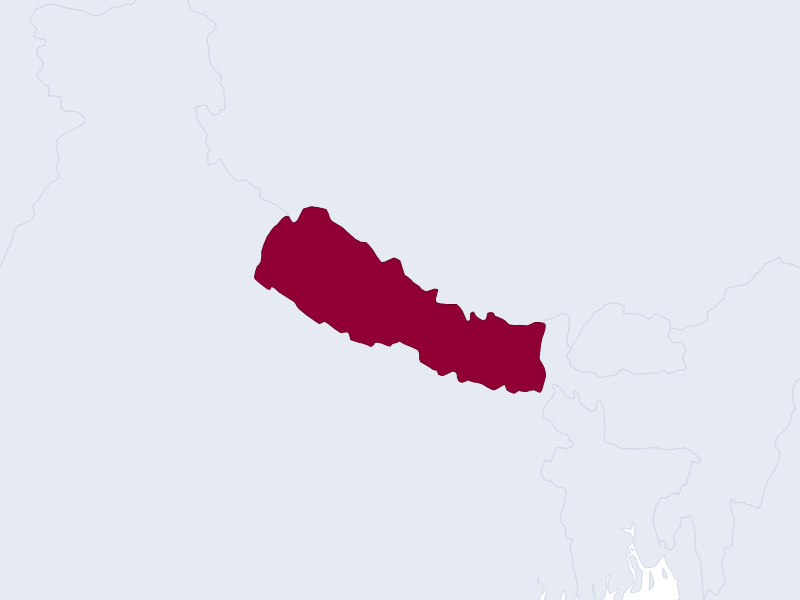
What a repatriation from Nepal costs
Nepal prices in the Long haul, 9 hours plus band. The range alongside is bed to bed and all in, covering the ground ambulance at both ends, the UK receiving bed and clinical handover, crew, equipment and oxygen, the seat block or stretcher, handling, landing and permits, the escort return travel and case management. Nothing here is a flight price with extras to follow.
£8,000to£75,000
From a medical escort in an economy seat to an air ambulance, bed to bed and all in.
There is no direct service between Nepal and the UK, so every case is a transit and the elapsed journey runs well beyond the hours in the air.
Figures as at August 2026, from a blend of actual UCS Assist cases and supplier ranges. Ranges are wide because cases are not alike. The full bed-to-bed cost breakdown prices each mode of transport, sets out what moves a case up its band and shows how to sense-check a quote.
Common questions
Why is there no direct flight to the UK?
There is no scheduled direct service between Kathmandu and any UK airport, so every repatriation is a transit, usually through the Gulf or Istanbul. That matters more than the extra hours suggest. A stretcher case means two aircraft, two sets of ground handling and a layover, and the elapsed journey commonly runs to sixteen hours or more. It should be planned as two sectors with a genuine rest rather than presented as a long flight.
How does altitude illness change the repatriation decision?
Descent is the treatment, and it is usually definitive. A trekker with high altitude pulmonary or cerebral oedema who is brought down promptly often improves quickly and may not need repatriating at all. The clinical question is therefore whether descent has resolved it, not whether to fly the patient home. Moving a patient with unresolved cerebral oedema onto a commercial aircraft, where cabin altitude sits at several thousand feet, is the wrong call.
Should helicopter rescue bills be scrutinised?
Yes, carefully. Nepal has a documented history of unnecessary and inflated helicopter evacuations billed to travel and medical insurers, sometimes for patients who were not seriously unwell, occasionally with several parties taking a share of the fee. That does not make every retrieval suspect, and genuine rescues here save lives. It does mean authorisation should be sought before the aircraft lifts wherever the clinical picture allows, and the invoice should be read against the clinical record afterwards.
How capable are the hospitals?
Kathmandu has private hospitals that will manage a serious patient, including intensive care, and they are used routinely for exactly this. Pokhara has reasonable capability for stabilisation and straightforward injury. Outside those two the picture is thin, and in the trekking regions there is no hospital at all, only aid posts and clinics staffed for primary care. The capability is concentrated, and everything upstream of it is retrieval.
How reliable is the road between Kathmandu and Pokhara?
Less reliable than the map suggests, and that is a structural feature of the corridor rather than bad luck. The highway is long, mountainous and repeatedly disrupted by landslides and washouts, particularly through and after the monsoon. Journey times of six to eight hours are normal and can extend considerably. For a patient who needs to reach Kathmandu, the domestic flight is usually the better clinical option, weather permitting.
When is an air ambulance the right answer?
For the patient who cannot tolerate a commercial cabin or the transit that a Nepal repatriation necessarily involves. Because there is no direct service, the argument for a jet is stronger here than on a corridor of similar distance with a direct flight, since a jet removes the layover and the second handling entirely. That is a genuine clinical consideration rather than a commercial preference.
Other corridors
Managing a case in Nepal?
Our clinical and operational teams are available around the clock. If the case is live, call rather than email.