

Medical repatriation from Ghana
Ghana is the West African corridor that behaves itself. Good direct capacity, manageable ground movement, and a short enough sector that a stable patient rarely needs a jet.
6.5 hours direct from Accra, with reliable year-round scheduled capacity to London
No reciprocal healthcare arrangement. Treatment is chargeable, and private facilities expect a guarantee of payment before admitting a serious case
What we typically see from Ghana
- Malaria, the dominant clinical risk and consistently underestimated by visitors who stopped prophylaxis early
- Road traffic trauma, particularly on the intercity routes north and west of Accra
- Cardiac events in business travellers and in older visitors on extended family stays
- Enteric infection and hepatitis, mostly outside Accra and Kumasi
- Deterioration of chronic disease during long visits, especially hypertensive and diabetic complications
- Diving and water incidents on the coast, where recompression capability is not local
The corridor that behaves itself
West Africa has a reputation for operational difficulty, and on some corridors it is deserved. Ghana is the exception worth knowing about.
Accra has reliable direct capacity to London on a six and a half hour sector. Ground movement in the city is manageable rather than adversarial. Airport handling is generally competent, and a stretcher case can be moved through it without the day disappearing.
None of that makes the clinical picture easier. It does mean that when the clinical decision is made, the logistics will usually support it rather than fight it, and that is not true everywhere in the region.
Malaria is the case, most of the time
The dominant clinical risk here is malaria, transmission runs year-round, and the failure mode is always the same. A visitor stops taking prophylaxis, or never starts, develops a fever a week later and assumes it is something else.
Falciparum malaria can move from unwell to critical inside two days. The delay is almost never in the treatment, which is available and effective. It is in the recognition, and the recognition depends on somebody asking the question early.
It matters for repatriation as well as for treatment. A patient with severe malaria and organ involvement is not a candidate for a scheduled cabin, and the assessment has to account for where the illness is going.
Accra, Kumasi, and then distance
The better private hospitals in Accra will manage a critical patient, and there is real intensive care capacity in the city. Kumasi is reasonable. Beyond those two the capability thins out quickly.
A road trauma case on an intercity route can therefore be a long way from anywhere appropriate, and the first move is frequently an in-country transfer rather than anything international. That transfer needs planning as a clinical event, with the right escort and the right equipment, rather than being treated as travel.
The sector home
Six and a half hours is a comfortable commercial sector. A stable patient with an appropriate escort and oxygen provision goes home in a scheduled cabin, and does so at a fraction of the cost of a jet.
The bed-to-bed figure on this corridor is dominated by the ground legs and the receiving bed rather than by the flight, which is a useful thing to explain to a payer looking at an air ambulance quote and wondering why the alternative is so much lower.
What we do differently here
We give an honest read on when Ghana is straightforward, because it often is, and we do not inflate the difficulty to justify a jet. A stable patient on a six-hour sector with good scheduled capacity is a commercial case, and saying so is part of the job.
Where it is not straightforward, usually a patient outside the two main cities or a diving incident on the coast, we say that plainly too, and we plan the in-country move before anybody starts looking at flights.
Where we stage from
The airport a case leaves from is a clinical decision as much as a logistical one, and it is set by where the patient is and what they can tolerate on the ground.
- Accra (ACC): the principal departure point, with good direct capacity to London and competent handling
- Kumasi (KMS): the second city, with a domestic leg to Accra for anything requiring a stretcher
- Takoradi (TKD): oil and gas cases from the western region, routed through Accra
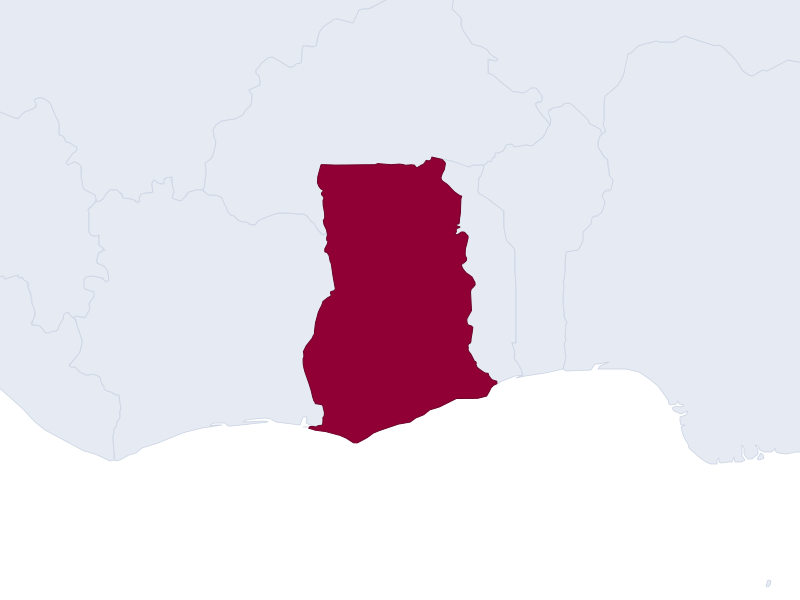
What a repatriation from Ghana costs
Ghana prices in the Medium haul, 5 to 8 hours band. The range alongside is bed to bed and all in, covering the ground ambulance at both ends, the UK receiving bed and clinical handover, crew, equipment and oxygen, the seat block or stretcher, handling, landing and permits, the escort return travel and case management. Nothing here is a flight price with extras to follow.
£5,000to£30,000
From a medical escort in an economy seat to an air ambulance, bed to bed and all in.
Figures as at August 2026, from a blend of actual UCS Assist cases and supplier ranges. Ranges are wide because cases are not alike. The full bed-to-bed cost breakdown prices each mode of transport, sets out what moves a case up its band and shows how to sense-check a quote.
Common questions
How does Ghana compare with the other West African corridors?
Operationally it is the most straightforward. Accra has good direct capacity to London, ground movement is manageable in a way that Lagos is not, and airport handling is generally competent. The clinical picture is broadly similar to the region, with malaria dominant, but the logistics that surround a case are considerably calmer. That is worth knowing, because it changes what is realistic on timing.
How capable are the hospitals?
The better private facilities in Accra will stabilise and manage a serious patient, and there is genuine intensive care capacity in the city. Kumasi has reasonable capability. Outside those two the picture thins quickly, and a patient injured on an intercity route may face a long journey before reaching anything appropriate. As across the region, a serious case belongs in a named hospital rather than the nearest one.
Why does malaria dominate the case profile?
Because transmission is year-round and because visitors treat prophylaxis as optional. The pattern is familiar and avoidable: a visitor stops taking it, develops a fever some days later, assumes it is a virus and waits. Falciparum malaria does not reward waiting. On any febrile patient from this corridor it should be the first question asked, and the answer changes both the treatment and the fitness-to-fly assessment.
Does a GHIC or the NHS cover treatment?
No. There is no reciprocal arrangement between the UK and Ghana. All treatment is chargeable, and the private hospitals used for serious cases will want payment arranged before admission. A guarantee of payment with defined scope secures the right facility and prevents an open-ended commitment.
Is a commercial stretcher realistic?
Yes, and on a six and a half hour sector with good scheduled capacity it is usually the correct answer for a stable patient. Carriers on the Accra route will accept a stretcher with proper notice and documentation. An air ambulance is reserved for the patient who genuinely cannot tolerate a commercial cabin, not for the case that simply feels serious.
What about diving incidents on the coast?
They need thinking about in advance, because recompression capability is not available locally in the way it is in the Red Sea or the Caribbean. A decompression case may need moving before it can be treated, and flying a patient with unresolved decompression illness is contraindicated. That combination makes it one of the few scenarios on this corridor where the right first move is neither treatment where they are nor a flight home.
Other corridors
Managing a case in Ghana?
Our clinical and operational teams are available around the clock. If the case is live, call rather than email.