

Medical repatriation from Norway
Norway is two hours from the UK and can take two days to leave. Almost every difficulty on this corridor happens north of Bergen or on a ship.
2 hours from Oslo, 1.5 from Bergen, 3.5 from Tromso, with good year-round capacity from the south and thinner options from the north
A UK GHIC gives access to the state system on the same basis as a Norwegian resident and works well. It never covers repatriation, and Norway is an expensive country for anything outside the state system
What we typically see from Norway
- Cardiac events in an older cruise and coastal voyage population, which is the single largest category
- Falls and fractures on ice, both in the cities through winter and on excursions
- Hiking and fjord trauma, where retrieval may involve helicopter or boat and take many hours
- Winter sports injury in the interior and around the mountain resorts
- Hypothermia and cold exposure, including in visitors underestimating how quickly conditions change
- Deterioration of chronic disease in cruise passengers far from a major hospital
Excellent medicine, difficult geography
Nothing about a Norwegian case is a problem of clinical quality. The hospitals are very good, the system is properly funded, and the university hospitals in Oslo, Bergen, Trondheim and Tromso provide full tertiary care.
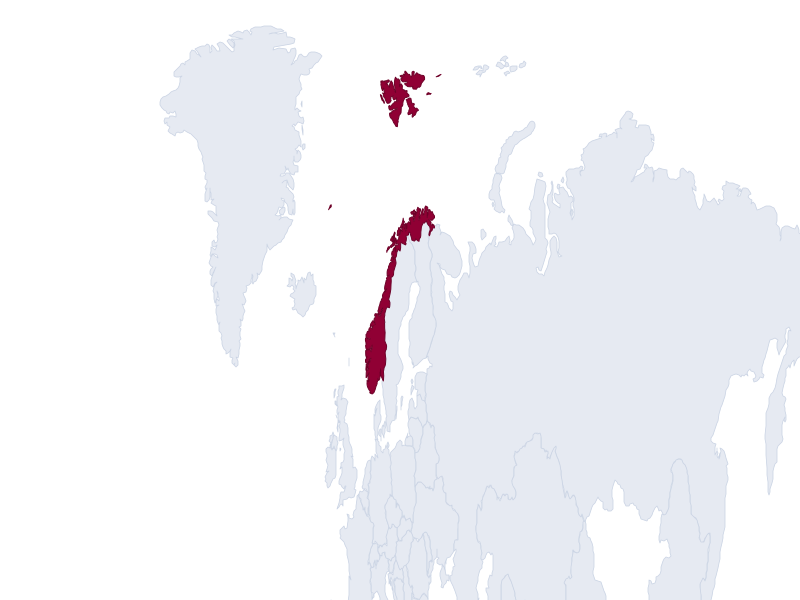
The difficulty is entirely geographical. Norway is enormously long, the population is scattered along a coastline of extraordinary complexity, and the capability sits in a small number of cities. A patient in a fjord village is a long way from a hospital, and then a long way again from an international airport.
Which means this corridor is almost never about whether to move a patient. It is about how to get them from where they are to somewhere an aircraft can leave from.
Cruise passengers are the caseload
Coastal voyages and fjord itineraries are the dominant reason British visitors are in Norway, and the demographic they carry is older than the average traveller.
Put an older population into small coastal communities with minimal local facilities and the result is predictable: cardiac events, falls on shore excursions, chronic disease deterioration, all occurring at distance from anything that can manage them properly.
Then the ship leaves. It takes the cabin, the luggage, the medication in the cabin safe, and frequently the plans of whoever the patient was travelling with. The clinical case may be straightforward; the practical vacuum left behind is not, and somebody has to fill it quickly.
Retrieval is a Norwegian strength
It is worth saying plainly that Norway is better equipped for this than most countries. The air ambulance and search and rescue system is built precisely for this geography, aircraft are positioned to cover the fjords, mountains and coast, and the crews are experienced in conditions that would stop most services.
The limiting factor is weather rather than capability. When it is flyable, retrieval is fast and professional. When it is not, nothing flies, and the honest answer to a family asking when their relative will be moved is that it depends on a forecast.
Ice, and the injury nobody plans for
Winter produces a steady and underestimated stream of fractures from falls on ice, in the cities as much as on excursions. Wrists, ankles, hips and heads, disproportionately in older visitors on northern lights trips who are walking on genuinely icy surfaces in unsuitable footwear.
It is unglamorous and it is high volume, and it is more likely to generate a repatriation than anything that happens on a mountain.
North and south are different corridors
From Oslo or Bergen the journey home is easy. Short sectors, good capacity, a stable patient travels without difficulty.
From Tromso and the Arctic north it is a two-stage movement, with a domestic leg first, fewer options at every step and winter weather capable of delaying both. A northern case needs planning as two sectors with real contingency built in, and families need timescales that reflect that rather than optimistic ones drawn from an Oslo case.
What we do differently here
We plan around the forecast rather than against it, because on this corridor weather is the schedule and pretending otherwise produces promises that break.
And we pick up what the ship put down. On a cruise-dominated corridor, the accommodation, the companion, the luggage and the medication are not administrative details around the edge of a medical case. For the family involved, they are most of the problem.
Where we stage from
The airport a case leaves from is a clinical decision as much as a logistical one, and it is set by where the patient is and what they can tolerate on the ground.
- Oslo (OSL): the principal departure point, with the best capacity to the UK and full tertiary care in the city
- Bergen (BGO): the shortest sector to the UK, and the main hospital for the western fjords
- Tromso (TOS): the Arctic hub, with the northern university hospital and a domestic leg before anything international
- Stavanger (SVG) and Trondheim (TRD): regional, with reasonable capability and some direct UK capacity
What a repatriation from Norway costs
Norway prices in the Europe, 2 to 4 hours band. The range alongside is bed to bed and all in, covering the ground ambulance at both ends, the UK receiving bed and clinical handover, crew, equipment and oxygen, the seat block or stretcher, handling, landing and permits, the escort return travel and case management. Nothing here is a flight price with extras to follow.
£3,000to£25,000
From a medical escort in an economy seat to an air ambulance, bed to bed and all in.
Oslo and Bergen sit squarely in this band. Tromso and the Arctic north add a domestic sector and can price at the top of it.
Figures as at August 2026, from a blend of actual UCS Assist cases and supplier ranges. Ranges are wide because cases are not alike. The full bed-to-bed cost breakdown prices each mode of transport, sets out what moves a case up its band and shows how to sense-check a quote.
Common questions
Is Norwegian healthcare a reason to repatriate?
No. Norway has excellent hospitals and a properly resourced system, and the university hospitals in Oslo, Bergen, Trondheim and Tromso provide full tertiary care. Nobody needs rescuing from Norwegian medicine. Repatriation here is about being home for a long recovery, continuity with a UK team, or a patient who wants to go home, and none of those require criticising the care they received.
So what is actually difficult?
Distance and weather, in that order. Norway is very long, the population is dispersed, and the capability is concentrated in a handful of cities. A patient taken unwell in a fjord village, on a mountain or in the Arctic north is a long way from a hospital and then a long way from an international airport. Weather closes roads, grounds helicopters and cancels domestic flights, in summer as well as winter.
How do cruise cases work here?
They are the largest single category on this corridor and they have their own shape. Coastal and fjord itineraries carry an older demographic to places with very small local facilities, so a cardiac event or a fall on a shore excursion can occur a considerable distance from anything appropriate. The ship then sails, taking the patient's cabin, belongings and often their companion's arrangements, and someone has to take over everything the vessel was providing.
Does a GHIC work?
Yes. Norway is inside the arrangements a UK GHIC covers, giving access to the state system on the same basis as a resident, and it works well for the emergency caseload. It never covers repatriation. It is also worth remembering that Norway is expensive, so the ancillary costs around a case, accommodation for a companion, ground transport, meals, add up faster here than almost anywhere in Europe.
What is Norwegian retrieval capability like?
Genuinely excellent, and better than most countries. Norway operates a well-developed air ambulance and search and rescue system built for exactly this geography, with helicopters positioned to cover the fjords, the mountains and the coast. The constraint is weather rather than capability or willingness, and when the weather is flyable the retrieval is usually quick and professional.
Is the flight home ever the hard part?
Rarely from the south. Oslo and Bergen have good capacity and short sectors, and a stable patient travels easily. From Tromso and the Arctic north it is different: a domestic leg comes first, options are fewer, and winter weather can delay both stages. A northern case should be planned as two sectors with contingency, not as a slightly longer version of an Oslo case.
Other corridors
Managing a case in Norway?
Our clinical and operational teams are available around the clock. If the case is live, call rather than email.