

Medical repatriation from Belgium
Belgium is the corridor where flying is usually the wrong decision. The tunnel is quicker bed to bed, gentler on the patient and cheaper, and it is still the second thing people think of.
1 hour by air, but 6 to 8 hours bed to bed by road through the tunnel, which is usually the better option
A UK GHIC gives access to the state system on the same basis as a Belgian resident and works well. Belgium also has a substantial private sector that sits outside it
What we typically see from Belgium
- Cardiac events in business travellers, of which Brussels generates a disproportionate number
- Road traffic trauma on the dense motorway network, including UK drivers on unfamiliar roads
- Cycling injury, which is high volume in a country where cycling is genuine mass transport
- Falls and fractures in city-break visitors, particularly on cobbled centres
- Deterioration of chronic disease in the large resident British and international institutional population
- Occupational and industrial injury around the ports and freight corridors
The corridor where the aircraft is the wrong tool
A one hour flight from Brussels to London looks like the obvious answer, and on this corridor it usually is not.
Count the whole journey rather than the sector. A stretcher patient flying is loaded into an ambulance, driven to the airport, handed to a handling agent, boarded, flown, disembarked, handed over again, and loaded into a second ambulance. Six transfers between surfaces, several handovers, and a great deal of waiting in between, for a sector that takes less time than the boarding.
A road ambulance collects the same patient from their ward and delivers them to the receiving ward. One vehicle, one crew, one clinical handover at each end, six to eight hours bed to bed through the tunnel.
Quicker in real terms, considerably gentler, and cheaper. On this corridor the road is the default and the aircraft is the exception that needs justifying.
When to fly anyway
Two situations. A patient who is comfortably mobile and can travel seated, where a scheduled flight with an escort is quick and simple and there is no reason to spend eight hours in a vehicle. And a genuinely time-critical case where an air ambulance into a specific UK centre saves hours that change an outcome.
Everything in between belongs on the road, and the reason it often is not is habit rather than assessment.
The hospitals are not the problem
Belgian healthcare is genuinely strong, with excellent university hospitals, full tertiary capability and short waiting times by European standards.
That removes clinical quality from the conversation entirely. Repatriation from Belgium is about being at home for a long recovery, continuity with a UK team, or a patient who simply wants to be back, and those are perfectly good reasons that do not require anybody to pretend the Belgian hospital was inadequate.
It also means there is rarely any urgency. A patient here can be moved when it suits the patient, which is a luxury most corridors do not offer.
Reimbursement, not free at the point of use
The GHIC works, and Belgium operates a system where patients frequently pay and then reclaim rather than receiving treatment free at the point of use.
British visitors regularly do not expect this and are unsettled by an invoice. It is not a failure of the GHIC and it is not a billing dispute, it is how the system runs. Explaining it early avoids a phone call that generates a great deal of heat.
A business travel caseload
Brussels concentrates international institutions, diplomatic missions and corporate headquarters, which produces an unusual patient mix: working-age professionals on short stays, plus a large resident international community.
The clinical consequence is a high proportion of cardiac events and chronic disease presentations rather than holiday trauma. The practical consequence is that the employer, the insurer, the family and the patient are frequently in four different countries, and establishing who is actually authorising decisions takes longer than the clinical assessment.
What we do differently here
We price and plan the road option first on this corridor rather than treating it as a fallback, because bed to bed it beats the aircraft on time, comfort and cost for most stretcher patients.
And we resist manufacturing urgency. Belgium is an hour away with excellent hospitals. A patient who is well cared for and stable can go home when going home is right for them, and saying so is more useful than arranging something quickly for its own sake.
Where we stage from
The airport a case leaves from is a clinical decision as much as a logistical one, and it is set by where the patient is and what they can tolerate on the ground.
- Calais and Coquelles: the tunnel crossing, and the realistic default for a stretcher case from anywhere in Belgium
- Brussels (BRU): high frequency to the UK, appropriate for a seated patient with an escort
- Antwerp, Liege and Ostend: regional airports, occasionally useful for an air ambulance sector but rarely necessary
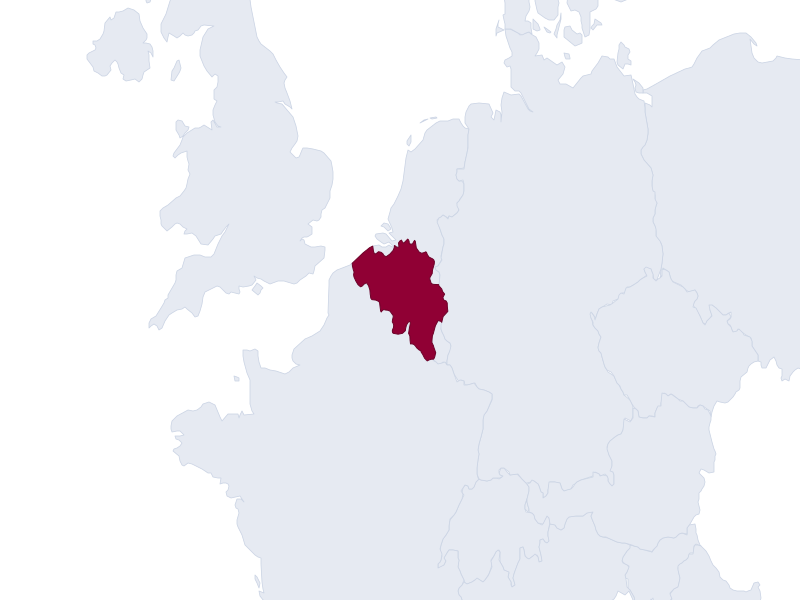
What a repatriation from Belgium costs
Belgium prices in the Europe, 2 to 4 hours band. The range alongside is bed to bed and all in, covering the ground ambulance at both ends, the UK receiving bed and clinical handover, crew, equipment and oxygen, the seat block or stretcher, handling, landing and permits, the escort return travel and case management. Nothing here is a flight price with extras to follow.
£3,000to£25,000
From a medical escort in an economy seat to an air ambulance, bed to bed and all in.
Most cases on this corridor are road rather than air. Bed to bed by road through the tunnel runs £3,000 to £6,000, which is the figure to compare against.
Figures as at August 2026, from a blend of actual UCS Assist cases and supplier ranges. Ranges are wide because cases are not alike. The full bed-to-bed cost breakdown prices each mode of transport, sets out what moves a case up its band and shows how to sense-check a quote.
Common questions
Why is road usually better than flying here?
Because a one hour flight is never a one hour journey. A stretcher case flying from Brussels involves an ambulance to the airport, airport handling, boarding, the sector, disembarkation, more handling and a second ambulance the other end, and the patient is moved between surfaces several times. A road ambulance collects the patient from the ward and delivers them to the receiving ward, six to eight hours later, with no transfers in between. On this corridor the road is quicker bed to bed, easier on the patient and cheaper.
When is flying the right call?
For a seated patient who is comfortably mobile, where a scheduled flight with an escort is simple and quick. And for a genuinely time-critical case where an air ambulance to a specific UK centre saves hours that matter clinically. Outside those, the aircraft is usually adding complexity rather than removing it.
How good are Belgian hospitals?
Very. Belgium has one of the better healthcare systems in Europe, with strong university hospitals, full tertiary capability and short waits by most standards. There is no clinical argument for repatriating a patient to get them better care. Repatriation here is about rehabilitation at home, continuity, family proximity and patient preference, all of which are legitimate and none of which are urgent.
Does a GHIC work?
Yes, for state healthcare on the same basis as a resident. Belgium operates a reimbursement model where patients often pay and reclaim, which can surprise visitors expecting the treatment to be free at the point of use. There is also a substantial private sector outside the GHIC. Neither is a problem, but both are worth understanding before a patient is presented with an invoice they were not expecting.
What makes Brussels distinctive?
The population. Brussels holds an unusually large concentration of international institutions, diplomatic missions and corporate offices, which means a high proportion of short-stay business travellers and a substantial resident international community. That skews the caseload towards cardiac events and chronic disease in working-age professionals, and towards patients whose employer, insurer and family may all be in different countries.
Is cycling injury really significant?
Yes. Cycling in Belgium is mass transport rather than recreation, volumes are high, and the injury pattern that follows, clavicle and wrist fractures, head injury, and occasional serious trauma from vehicle collisions, is correspondingly common. Visitors using hire bikes in unfamiliar cities are over-represented in it.
Other corridors
Managing a case in Belgium?
Our clinical and operational teams are available around the clock. If the case is live, call rather than email.