

Medical repatriation from Qatar
Qatar is the corridor where the honest answer is often that the patient should stay where they are, and the second most useful thing we do is say so.
7 to 7.5 hours direct from Doha, with excellent scheduled capacity in both directions
No reciprocal healthcare arrangement. Care is chargeable, though employer-sponsored cover is widespread among the resident workforce and should be established before anything is assumed
What we typically see from Qatar
- Cardiac events in the expatriate professional population, which skews middle-aged and sedentary
- Road traffic trauma, with high vehicle speeds on the arterial routes and severe mechanisms
- Heat illness and dehydration through the summer, when outdoor exposure is genuinely dangerous
- Industrial and construction injury among the resident workforce
- Deterioration of chronic disease in visiting relatives of expatriate residents
- Cases arising in transit, in passengers taken unwell on a connection rather than resident in the country
The corridor where the answer is often no
Most of these pages explain how to get somebody home. This one starts by asking whether they should come.
Qatar has hospital capability that will manage a critical patient properly, with cardiac intervention, neurosurgery and intensive care available to a standard that does not need apologising for. A patient admitted here after a serious road accident is, in most cases, already somewhere appropriate.
That makes the honest recommendation on a great many Qatar cases straightforward: complete the acute phase where the patient is, and revisit repatriation when they are a step-down case rather than an unstable one. Saying that costs us a repatriation and is obviously the right advice.
When moving genuinely helps
There are good reasons to bring somebody home from Qatar, and they are worth separating from the bad ones.
A patient facing a long rehabilitation is usually better doing it at home, near family, inside a system that will still be looking after them in six months. A patient whose care depends on continuity with a UK specialist team benefits from being with that team. A patient who is stable, wants to be home, and is fit to travel does not need a clinical justification beyond that.
What is not a good reason is a general unease about foreign healthcare. It is the reason most often offered, it does not survive contact with the facts here, and acting on it moves patients who were better off staying.
Who is paying, and who they work for
Most of the expatriate population holds cover arranged through an employer, and that shapes cases in ways worth knowing early. It determines which hospital a patient is taken to, what the cover actually extends to, and who has authority to make decisions about repatriation.
Establishing that in the first hours saves a great deal of confusion later, particularly where an employer, an insurer and a family each believe they are directing the case.
The transit patient
Doha is one of the busiest connecting airports in the world, which produces a category of case that barely exists elsewhere: the passenger who falls ill between two other countries.
They are admitted somewhere they never meant to be, frequently without their baggage, their medication or anybody local to call. The clinical management is usually simple. The administrative position, working out whose policy responds and to what, is not, and it is where these cases stall.
We treat them as a corridor of their own, because the questions they raise are nothing like those of a resident case.
Heat is a clinical planning factor
Through the summer, ground movement in Qatar has to be planned around the temperature rather than around the traffic. For a patient with cardiac or respiratory compromise, time on an open apron in July is a genuine physiological load.
Transfers get timed for the cooler hours where possible, vehicles and cabins are pre-cooled, and apron exposure is minimised. It is easy to manage and expensive to overlook.
What we do differently here
We give an unwelcome answer when it is the right one. On a corridor with this much local capability, the value we add is more often a clear recommendation not to move somebody than a well-run flight home.
When the case does justify moving, seven hours direct with excellent capacity means it should be uneventful, and we plan it to be.
Where we stage from
The airport a case leaves from is a clinical decision as much as a logistical one, and it is set by where the patient is and what they can tolerate on the ground.
- Doha (DOH): the single international departure point, with exceptional scheduled capacity, strong handling and a medical desk used to stretcher cases
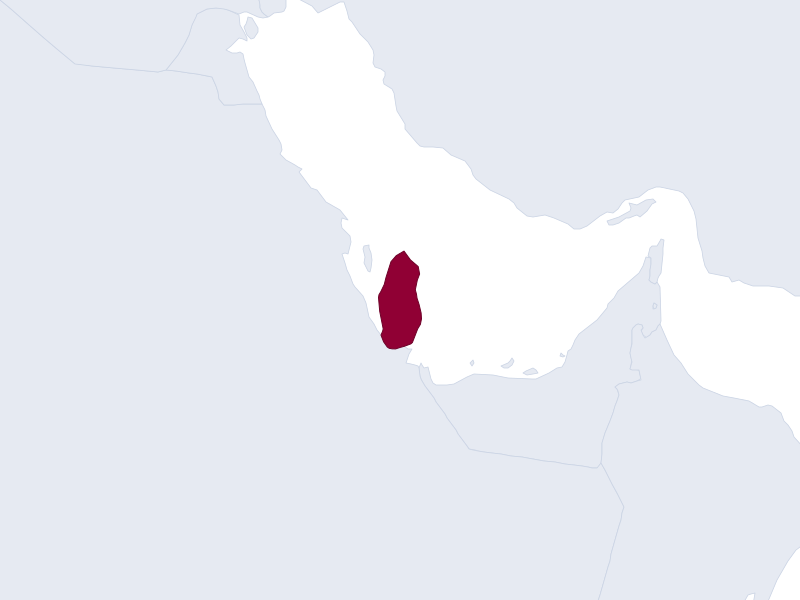
What a repatriation from Qatar costs
Qatar prices in the Medium haul, 5 to 8 hours band. The range alongside is bed to bed and all in, covering the ground ambulance at both ends, the UK receiving bed and clinical handover, crew, equipment and oxygen, the seat block or stretcher, handling, landing and permits, the escort return travel and case management. Nothing here is a flight price with extras to follow.
£5,000to£30,000
From a medical escort in an economy seat to an air ambulance, bed to bed and all in.
Figures as at August 2026, from a blend of actual UCS Assist cases and supplier ranges. Ranges are wide because cases are not alike. The full bed-to-bed cost breakdown prices each mode of transport, sets out what moves a case up its band and shows how to sense-check a quote.
Common questions
Is repatriation from Qatar usually necessary?
Often not, and that is the most important thing to say about this corridor. Qatar has hospital capability that will manage complex and critical patients to a high standard, including cardiac intervention, neurosurgery and intensive care. A patient who would be repatriated from a country with thin capability may be better served completing treatment here. The clinical question is whether moving them adds anything, and frequently the answer is that it adds risk without adding care.
So when is repatriation the right call?
When the patient needs a long rehabilitation that is better done at home, when continuity with a UK specialist team genuinely matters to the outcome, when the case is a step-down rather than an acute admission, or when the patient wants to be home and is fit to travel. Those are good reasons. Distrust of the local system is not one, and it is the reason most often given.
Does a GHIC cover anything?
No. There is no reciprocal healthcare arrangement between the UK and Qatar. Most of the resident expatriate population holds employer-sponsored cover, which is worth establishing early because it changes who is paying and often which hospital the patient is directed to. Visitors and transit passengers have no such cover and are straightforwardly private patients.
What about passengers taken ill in transit?
It is a genuine category here in a way it is not elsewhere, because Doha is one of the busiest connecting hubs in the world. A passenger who becomes unwell mid-journey is admitted in a country they never intended to enter, often with no local contacts, sometimes without baggage or medication, and with an insurer who has to work out very quickly what cover applies. These cases are logistically simple and administratively awkward, which is the opposite of most corridors.
How straightforward is the flight home?
As straightforward as any long-ish sector gets. Seven hours direct, multiple daily services, a carrier network experienced with stretcher cases and medical clearance, and airport handling that works. If a patient is fit to travel, moving them is rarely the difficult part of a Qatar case.
Is summer heat a real operational factor?
Yes. Outdoor temperatures through the summer months make any ground movement a clinical consideration rather than a logistical one, particularly for a patient with cardiac or respiratory compromise. Transfers are planned around the time of day, ambulances and the aircraft are pre-cooled, and time on an open apron is minimised. It is straightforward to manage and damaging to ignore.
Other corridors
Managing a case in Qatar?
Our clinical and operational teams are available around the clock. If the case is live, call rather than email.