

Medical repatriation from the Czech Republic
Prague produces a category of case that no other European corridor produces in the same volume, and almost all of it happens after midnight.
2 hours from Prague, with very high scheduled frequency to multiple UK airports
A UK GHIC gives access to the state system on the same basis as a Czech resident and works well. It never covers repatriation, and it does not cover the private clinics some visitors are taken to
What we typically see from Czech Republic
- Alcohol-related injury in short-break visitors, principally head injury, facial trauma and fractures from falls
- Falls on the uneven cobbled streets and steep steps of the old city, sober as well as otherwise
- Assault and altercation injury in the nightlife districts
- Winter sports trauma in the Krkonose and Sumava mountains, mostly knee, shoulder and lower leg
- Cardiac events in older visitors on cultural and river cruise itineraries
- Deterioration of chronic disease in longer-stay visitors and in the resident British population
The city break with a caseload
Every corridor has a signature, and Prague’s is unusually specific. It is a short flight from every UK airport, it is inexpensive, and it is one of the busiest stag and short-break destinations in Europe.
That produces a case profile no Mediterranean corridor generates in the same volume: young, otherwise healthy patients with head injuries, facial trauma and fractures, sustained after midnight, on cobbles and steps and tram tracks, with a large amount of alcohol involved.
There is nothing complicated about most of it. What there is, is a lot of it, and a set of assessment traps that come with it.
Intoxication makes a simple injury harder
This is the part worth taking seriously. A head injury in an intoxicated patient is genuinely more difficult to assess than the same injury in a sober one, because reduced consciousness has two possible causes and assuming the benign one is how people get hurt.
The right approach is serial observation, a low threshold for imaging, and resisting the pull towards discharging somebody who appears to be merely drunk. Czech emergency departments know this well. The risk more often sits with a travelling companion who takes a friend back to a hotel rather than to a hospital.
For an insurer, the practical implication is that a call reporting a minor injury after a night out sometimes turns into a significant case a few hours later, and the file should be held open accordingly.
Nothing wrong with the hospitals
Czech healthcare is good. Prague has full tertiary capability, including neurosurgery and major trauma, and the regional hospitals handle the routine work of this corridor competently.
So the default should be treatment where the patient is, and repatriation when they are fit to travel rather than as a rescue. Moving a patient two hours west for care they are already receiving adds cost and risk and improves nothing.
The exception worth watching is the private clinics that some visitors are steered towards from the tourist districts. They sit outside the state system and the GHIC, and they bill separately and sometimes enthusiastically. Establishing which system a patient is actually in is a five minute job that occasionally saves a great deal.
Two hours, or eighteen by road
Scheduled frequency between Prague and the UK is very high, which makes the flight the obvious answer for most patients.
But the road option is real here in a way it is not from Greece or Turkey. A road ambulance through Germany, Belgium and the tunnel reaches a UK receiving hospital in around eighteen to twenty hours, bed to bed, without the patient ever having to fold into an aircraft seat or be handled onto and off an aircraft.
For a patient in a full leg cast, or one facing a multi-day wait for a suitable flight configuration, that is frequently the better clinical answer as well as the cheaper one. It should be considered rather than defaulted past.
The mountains, briefly
The Krkonose and Sumava produce a modest winter caseload of the familiar sort. They are smaller and more accessible than the Alps, retrieval is quick, and the regional hospitals do this work all season.
It is the least remarkable part of an unremarkable corridor, and that is meant as a compliment.
What we do differently here
We take the after-midnight call seriously rather than filing it as a minor injury, because on this corridor the difference between a bruise and a subdural is often several hours and one reassessment.
And we look at the road properly on every case where the patient is stable and the flight is awkward. Eighteen hours in an ambulance sounds worse than two hours in a cabin until you count the handling at both ends, and on this corridor it frequently is not.
Where we stage from
The airport a case leaves from is a clinical decision as much as a logistical one, and it is set by where the patient is and what they can tolerate on the ground.
- Prague (PRG): the principal departure point, with very high frequency to the UK and competent handling
- Brno (BRQ) and Ostrava (OSR): regional, generally with a domestic transfer to Prague for a stretcher case
- Road and rail: a genuine option for a stable patient, with the drive to a UK receiving hospital taking around 18 to 20 hours
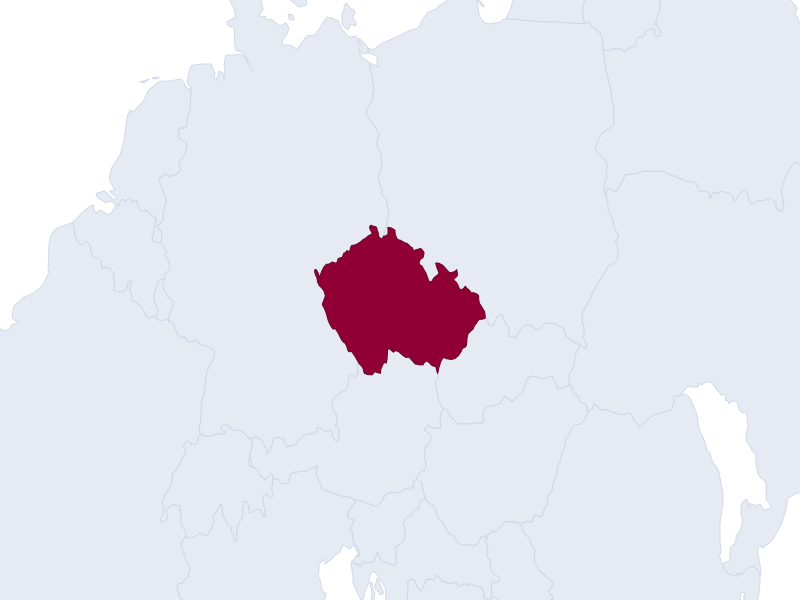
What a repatriation from Czech Republic costs
Czech Republic prices in the Europe, 2 to 4 hours band. The range alongside is bed to bed and all in, covering the ground ambulance at both ends, the UK receiving bed and clinical handover, crew, equipment and oxygen, the seat block or stretcher, handling, landing and permits, the escort return travel and case management. Nothing here is a flight price with extras to follow.
£3,000to£25,000
From a medical escort in an economy seat to an air ambulance, bed to bed and all in.
Figures as at August 2026, from a blend of actual UCS Assist cases and supplier ranges. Ranges are wide because cases are not alike. The full bed-to-bed cost breakdown prices each mode of transport, sets out what moves a case up its band and shows how to sense-check a quote.
Common questions
Why does alcohol dominate the case profile?
Because of what Prague is used for. It is one of the most popular short-break and stag destinations in Europe, and a large share of visitors are drinking heavily in a city with cobbled streets, steep steps, tram tracks and a river. The resulting injuries are unglamorous and entirely predictable: head injuries from falls, facial and dental trauma, wrist and ankle fractures, occasional assault. It is a volume problem rather than a complexity one.
Does intoxication complicate the clinical picture?
Considerably, and it is the reason these cases are less trivial than they look. A head injury in an intoxicated patient is harder to assess, because reduced consciousness has two possible explanations and only one of them is safe to assume. Serial observation and a low threshold for imaging matter here, and a patient discharged too early because they seemed merely drunk is the failure mode to guard against.
How good are the hospitals?
Good. Czech hospitals provide care to a standard that needs no qualification, Prague has full tertiary capability including neurosurgery and major trauma, and the regional hospitals are perfectly competent for the injuries this corridor generates. Repatriating for clinical quality is not a defensible position, and most cases here should be treated locally and brought home when they are fit to travel.
Does a GHIC work?
Yes, properly. The Czech Republic is inside the arrangements a UK GHIC covers, giving access to the state system on the same basis as a resident. Two caveats. It never covers repatriation. And some visitors are taken to private clinics, particularly from the tourist districts, which sit outside it entirely and bill separately, so establishing which system a patient is in matters.
Is road repatriation realistic?
For a stable patient, yes, and it is genuinely worth considering. A road ambulance to a UK receiving hospital takes roughly eighteen to twenty hours through Germany, Belgium and the tunnel. For a patient in a full leg cast who simply cannot fold into an aircraft seat, or one who would otherwise wait days for a suitable flight configuration, that can be both cheaper and kinder than the alternative.
What about the mountains?
The Krkonose and Sumava ranges produce a winter caseload of the usual sort, knee and shoulder injuries, lower leg fractures, occasional head injury. They are smaller and less remote than the Alps, so retrieval is faster and less complicated, and the regional hospitals handle this work routinely. It is a straightforward corner of a straightforward corridor.
Other corridors
Managing a case in Czech Republic?
Our clinical and operational teams are available around the clock. If the case is live, call rather than email.