

Medical repatriation from Cuba
Cuba is the one corridor where the doctors are rarely the constraint. What they can get hold of is.
9.5 to 10 hours direct from Havana, with limited frequency and thinner capacity than the rest of the Caribbean
No reciprocal arrangement, and travel medical insurance is a legal condition of entry. Foreign patients are treated in a separate chargeable system and payment is expected in hard currency
What we typically see from Cuba
- Cardiac events in an older visitor population on longer stays
- Road traffic trauma, including in classic and hire vehicles with limited modern safety equipment
- Falls and fractures in colonial old towns with uneven surfaces and poor lighting
- Water and diving incidents on the cays and the southern coast
- Deterioration of chronic disease where a visitor runs short of their own medication and local substitutes are unavailable
- Enteric infection and dehydration, particularly outside the resort areas
Well-trained doctors, empty shelves
Cuba inverts the usual assumption about healthcare in a developing economy.
The clinical training is strong, the doctors are capable, and the country has exported medical expertise for decades. A British patient is not in the hands of people who do not know what they are doing.
The problem is supply. Shortages of drugs, consumables, reagents and equipment parts are persistent and documented, and they mean a clinician can identify precisely what a patient needs and be unable to obtain it. A ventilator without a circuit, or a diagnosis without the drug that treats it, is a different failure from incompetence and requires a different response.
Assessing a Cuban case means asking what is actually available for this patient this week, not what the system is capable of in principle.
Two systems, and you will be in the other one
Cuba runs dedicated services for foreign patients, separate from the domestic system, and an insured visitor is directed to them. They are better resourced than the general system and used to dealing with international insurers.
That is a considerable advantage over being absorbed into a general hospital. It is also unfamiliar territory for UK insurers, and the practical arrangements around admission, authorisation and billing are not the ones they use everywhere else.
Payment is the administrative trap
Sanctions and international banking arrangements make ordinary payment mechanisms unreliable here in a way that has no parallel in the region. Cards may not process, transfers may not clear, and settlement can take routes that surprise everybody.
None of that is clinical, and all of it delays a discharge and therefore a repatriation. It is entirely manageable if it is established in the first hours of a case, and reliably obstructive if it is left until somebody wants to leave.
The medication clock
This is the point that changes decisions most often on this corridor.
A visitor managing a long-term condition arrives with their own supply. If the trip extends, or if they are admitted and their own supply runs down, the local substitute may simply not exist. A patient who is entirely stable on their own medication can deteriorate for no reason other than that it has run out.
Where that risk is present, the case is more urgent than the acute picture suggests. Either the medication is brought in, which takes planning, or the patient comes home earlier than a purely clinical reading would indicate.
Thin capacity home
Direct services from Havana to the UK are less frequent than from the busier Caribbean islands, which has two consequences. Stretcher configurations take longer to secure, and if a booking falls through there is less to fall back on.
Air ambulance movements into Cuba are also less routine than in the surrounding region and require more lead time and more coordination. Neither is a barrier, but both reward starting early and neither rewards assuming that what works in Barbados works here.
What we do differently here
We ask what is on the shelf rather than what the hospital can do, because on this corridor those are different questions and only one of them predicts the outcome.
And we start the payment and documentation work on day one. On a corridor where the banking is the bottleneck, treating administration as something to sort out at discharge is how a clinically ready patient spends an extra week in a hospital bed.
Where we stage from
The airport a case leaves from is a clinical decision as much as a logistical one, and it is set by where the patient is and what they can tolerate on the ground.
- Havana (HAV): the principal international departure point and where the capability for foreign patients is concentrated
- Varadero (VRA): resort traffic with some international capacity, though serious cases move to Havana
- Holguin (HOG) and Cayo Coco (CCC): resort airports in the east, almost always with a domestic leg to Havana first
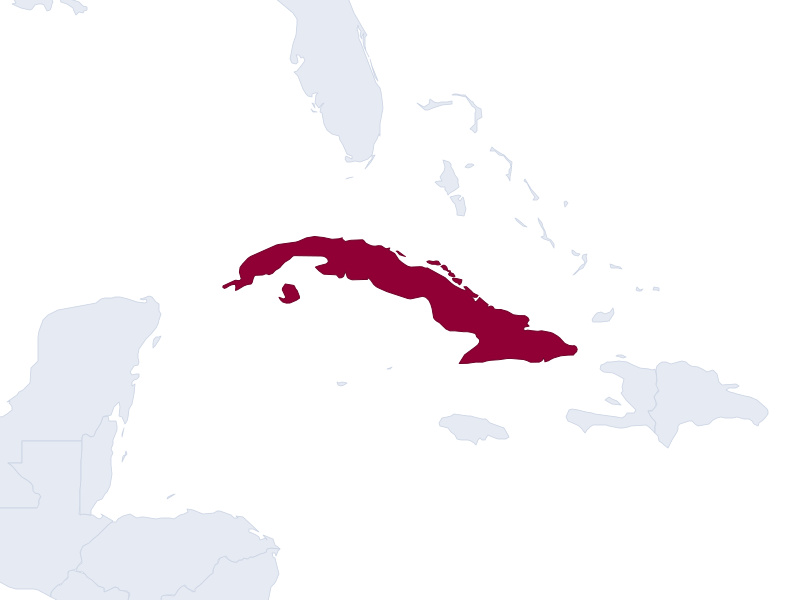
What a repatriation from Cuba costs
Cuba prices in the Long haul, 9 hours plus band. The range alongside is bed to bed and all in, covering the ground ambulance at both ends, the UK receiving bed and clinical handover, crew, equipment and oxygen, the seat block or stretcher, handling, landing and permits, the escort return travel and case management. Nothing here is a flight price with extras to follow.
£8,000to£75,000
From a medical escort in an economy seat to an air ambulance, bed to bed and all in.
Figures as at August 2026, from a blend of actual UCS Assist cases and supplier ranges. Ranges are wide because cases are not alike. The full bed-to-bed cost breakdown prices each mode of transport, sets out what moves a case up its band and shows how to sense-check a quote.
Common questions
Is travel insurance really compulsory?
Yes. Cuba requires visitors to hold travel medical insurance as a condition of entry, and it can be checked on arrival. In practice this means most British visitors arrive with cover, which removes the uninsured-patient problem that dominates some corridors. It does not mean the cover is adequate for a repatriation, and the gap between having a policy and having a policy that responds properly is where cases get difficult.
How good is Cuban medicine?
The clinical training is genuinely strong and Cuban doctors are well regarded internationally. That is not a diplomatic courtesy, it is the reality of the system. The constraint is not knowledge but supply. Shortages of drugs, consumables and spare parts for equipment are persistent and well documented, and they mean a clinician who knows exactly what a patient needs may not be able to obtain it. That is a very different problem from poor care and it needs assessing differently.
Are foreign patients treated separately?
Yes. Cuba operates dedicated facilities and services for foreign patients, distinct from the domestic system, and that is where an insured visitor will be directed. Standards in these facilities are better resourced than the general system. Payment is expected in hard currency and the arrangements are unfamiliar to most UK insurers, which is worth working through early rather than at discharge.
What makes payment complicated?
International banking and sanctions arrangements affecting Cuba make routine payment mechanisms unreliable in ways that do not apply anywhere else in the region. Card processing, transfers and settlement can all behave unexpectedly. This is an administrative obstacle rather than a clinical one, but it delays discharge and repatriation if it is left until the end, so it should be established at the start of a case.
Should medication supply change the urgency?
Frequently, yes, and this is the most practical point on the corridor. A visitor with a chronic condition who runs short of their own medication may not be able to obtain an equivalent locally, and a patient who is clinically stable today can become unstable simply through supply. Where that risk exists, either the medication is brought in or the patient comes home sooner than the acute picture alone would suggest.
How limited is the flight capacity?
Noticeably thinner than elsewhere in the Caribbean. Direct services to the UK from Havana are less frequent than to Barbados or Antigua, which lengthens the wait for a suitable stretcher configuration and reduces the fallback options if a booking fails. Air ambulance operations into Cuba are also less routine than in the surrounding region and need arranging with more lead time.
Other corridors
Managing a case in Cuba?
Our clinical and operational teams are available around the clock. If the case is live, call rather than email.