

Medical repatriation from Bangladesh
The capability is in Dhaka. The British patients are usually not, and that gap is the whole corridor.
10 hours direct from Dhaka, longer via a Gulf or Istanbul connection, plus the domestic leg from Sylhet
No reciprocal healthcare arrangement. All treatment is chargeable, and the private hospitals used for serious cases expect payment arranged in advance
What we typically see from Bangladesh
- Deterioration of chronic disease on extended family visits, particularly cardiac, diabetic and renal, in older British Bangladeshi visitors
- Stroke, frequently presenting outside any thrombolysis window because of distance from a capable centre
- Road trauma, with long pre-hospital times outside Dhaka and Chattogram
- Dengue, which runs in severe seasonal epidemics and produces genuinely critical patients
- Enteric fever and hepatitis acquired during long stays
- Respiratory deterioration through the winter, when Dhaka air quality is among the worst measured anywhere
The gap between where they are and where the care is
Most corridors ask whether a patient should come home. This one first asks whether the patient can get to Dhaka.
The UK connection to Bangladesh runs overwhelmingly through Sylhet. Families visit Sylhet, patients fall ill in Sylhet, and Sylhet does not have the critical care capability that a serious case needs. Dhaka does, and Dhaka is a long road journey away.
So the first clinical decision on this corridor is almost never about an aircraft to London. It is about moving a patient two hundred kilometres to a hospital that can hold them, and doing it in a way that does not make them worse.
The domestic leg is a clinical event
Five to seven hours by road, on roads that are busy and not smooth, is a meaningful physiological load for an unstable patient. It is not a taxi ride with a nurse in the back.
Where the patient can tolerate it, a domestic flight is quicker and gentler, but it needs a seat configuration that works, ground handling at both ends and timings that do not leave a patient waiting in a terminal. Where neither is safe, the honest answer is that the patient is not yet transferable and the case is about stabilisation first.
Planning this leg properly is the single largest difference between a well-run case on this corridor and a badly run one.
Ten hours, and whether to break it
From Dhaka the direct sector to London is around ten hours. For a stable patient with an escort that is entirely manageable, and it avoids the compounding of a transit.
A connection through the Gulf or Istanbul adds a second set of handling, a second aircraft and several hours on the ground, all of which fall on a patient who is already tired. Where a transit cannot be avoided, it should be planned as two sectors with a genuine rest rather than presented as a slightly longer journey.
Seasonal load changes everything
Dengue runs in epidemics here, and in a bad year it does not merely produce patients, it consumes beds. A case arriving in Dhaka during a severe season is competing for intensive care capacity with a very large local caseload.
Winter brings the other seasonal problem. Dhaka air quality through the cold months is among the worst recorded anywhere, and it produces genuine respiratory deterioration in patients who already have limited reserve. Both of these are predictable, and both should shape the urgency of a decision rather than surprising it.
What we do differently here
We treat the Sylhet to Dhaka leg as part of the repatriation rather than as something the family arranges before the real work starts. It carries the clinical risk, it is where the chain of responsibility usually breaks, and it is the part nobody else prices.
We also name the receiving hospital in Dhaka rather than leaving it to whoever answers first. On a corridor where the spread between facilities is this wide, that choice determines what the patient looks like by the time they reach an aircraft.
Where we stage from
The airport a case leaves from is a clinical decision as much as a logistical one, and it is set by where the patient is and what they can tolerate on the ground.
- Dhaka (DAC): the only realistic international departure point for a stretcher case, and where the tertiary capability sits
- Sylhet (ZYL): the origin of a large share of UK-linked cases, with limited international capacity and a domestic leg to Dhaka for anything serious
- Chattogram (CGP): the second city, usually routed through Dhaka for repatriation
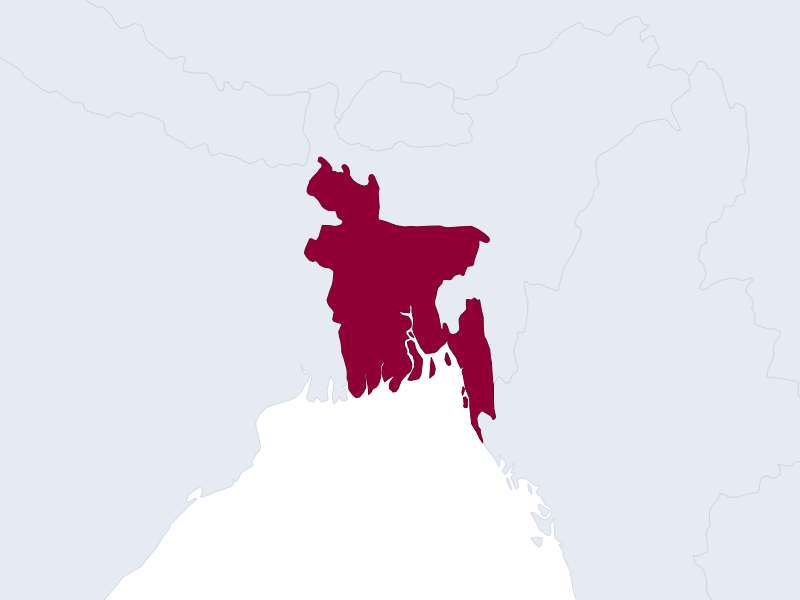
What a repatriation from Bangladesh costs
Bangladesh prices in the Long haul, 9 hours plus band. The range alongside is bed to bed and all in, covering the ground ambulance at both ends, the UK receiving bed and clinical handover, crew, equipment and oxygen, the seat block or stretcher, handling, landing and permits, the escort return travel and case management. Nothing here is a flight price with extras to follow.
£8,000to£75,000
From a medical escort in an economy seat to an air ambulance, bed to bed and all in.
Figures as at August 2026, from a blend of actual UCS Assist cases and supplier ranges. Ranges are wide because cases are not alike. The full bed-to-bed cost breakdown prices each mode of transport, sets out what moves a case up its band and shows how to sense-check a quote.
Common questions
Why does Sylhet matter so much on this corridor?
Because that is where the British connection is. A very large proportion of the UK Bangladeshi community traces to the Sylhet division, and visits home go there rather than to the capital. The clinical capability, however, is concentrated in Dhaka. So the typical serious case starts roughly two hundred kilometres from the hospital that can manage it, and the first decision is about a domestic transfer, not an international one.
How is the domestic leg usually done?
By road in most cases, which takes five to seven hours and is not a comfortable journey for an unstable patient, or by domestic flight where the patient can tolerate a scheduled cabin and the timings work. Air ambulance capacity within Bangladesh exists but is limited and needs arranging rather than assuming. This leg deserves the same clinical planning as the sector to the UK, and it frequently gets none.
How good are the Dhaka hospitals?
The leading private hospitals in Dhaka are capable of managing a critical patient, including ventilated cases, and are used routinely for exactly this purpose. They are not evenly matched, and the difference between the best and the middle of the field is significant. Public facilities are heavily overloaded. A serious case belongs in a named private hospital rather than wherever the patient was first taken.
Does a GHIC cover anything?
No. There is no reciprocal healthcare arrangement between the UK and Bangladesh, so every element of treatment is chargeable. A guarantee of payment issued early with defined scope determines both which hospital will admit the patient and what the eventual bill looks like.
Should a case wait for a direct flight?
Usually yes, if the patient is stable enough. The direct sector from Dhaka is around ten hours and avoids a transit, and a transit with a stretcher patient means a second set of ground handling, a second aircraft and several more hours. Where a connection through the Gulf or Istanbul is unavoidable, it should be planned as two sectors with a rest, not as one long day.
What about dengue?
It is seasonal, it is severe, and in epidemic years it fills the hospitals. Severe dengue with plasma leakage or bleeding is a critical care patient, not a traveller with a fever, and fitness to fly needs assessing against where the illness is heading rather than the current observation chart. In a bad season, bed availability in Dhaka itself becomes a real constraint on the case.
Other corridors
Managing a case in Bangladesh?
Our clinical and operational teams are available around the clock. If the case is live, call rather than email.