

Medical repatriation from Nigeria
The flight is short and reliable. Everything that determines how this case runs happens on the ground in Lagos, before anybody reaches an aircraft.
6.5 hours from Lagos, 6.5 to 7 from Abuja, with good direct scheduled capacity to London
No reciprocal healthcare arrangement. Care is private and paid for, and the hospitals worth using will want a guarantee of payment in place before admission
What we typically see from Nigeria
- Malaria, frequently presenting late in visitors who took no prophylaxis or stopped it early, and occasionally severe by the time it is recognised
- Road traffic trauma, a high-volume category with long pre-hospital times outside the cities
- Cardiac events in business travellers and in older visitors on extended family stays
- Typhoid, hepatitis and other enteric infection acquired outside the main urban centres
- Deterioration of chronic disease during long visits, particularly hypertensive and diabetic complications
- Obstetric emergencies in visitors, which are disproportionately represented and time-critical
The short sector nobody plans for
Six and a half hours from Lagos to London is not a difficult flight. It is inside the range where a stable patient travels comfortably on a scheduled aircraft with an escort, and direct capacity is good in both directions.
Which is precisely why cases on this corridor go wrong for reasons that have nothing to do with flying. The clinical decision is usually straightforward. The operational one, moving a patient from a hospital bed to an aircraft door in a city of twenty million, is where the case is actually won or lost.
Which hospital, not whether a hospital
Nigeria has private hospitals that will manage a serious patient properly, and it has a great many that will not. The gap between the two is the widest of any corridor we run.
So the first question is never whether the patient needs moving to the UK. It is whether the patient is currently somewhere that can hold them safely while that decision is made. A case admitted to the nearest facility after a road accident frequently needs an in-country transfer before anything else is considered, and that transfer is a clinical event in its own right.
Malaria, and the delay that matters
Falciparum malaria is the signature clinical risk on this corridor, and the danger sits in the recognition rather than the treatment.
A visitor who took no prophylaxis develops a fever, assumes it is a virus, and waits. By the time the diagnosis is made the patient can be several days into an illness that moves quickly. We would rather ask the question early on every febrile case from this corridor and be wrong most of the time than ask it late once.
It also has a direct bearing on fitness to fly. Severe malaria with organ involvement is not a patient for a scheduled cabin, and the assessment has to be made on where the illness is going rather than where it is.
Ground time is the real variable
Lagos traffic is not a footnote. A transfer that looks like forty minutes on a map can take three hours, and a departure planned without that built in produces a patient sitting in an ambulance while a slot is missed.
Movement outside the main cities, and movement at night, needs a route assessment rather than a booking. This is ordinary operational planning rather than anything dramatic, but it has to be done in advance, because there is no recovering it on the day.
Payment opens the door
With no reciprocal arrangement, admission to the hospitals worth using is a commercial transaction. A guarantee of payment issued early, with defined scope, gets the patient into the right facility. Issued late or open-ended, it either arrives after the patient has been taken somewhere worse, or it commits an insurer to whatever follows.
What we do differently here
We hold a view on named hospitals rather than cities, and we say plainly which we would move a patient to. A corridor with this much variation is not served by general reassurance.
We also plan the ground legs with the same seriousness as the flight, because on this corridor they are the harder half. Bed to bed means the hospital doors at both ends, and on the Lagos corridor the distance between those doors and the aircraft is where the clinical risk actually accumulates.
Where we stage from
The airport a case leaves from is a clinical decision as much as a logistical one, and it is set by where the patient is and what they can tolerate on the ground.
- Lagos (LOS): the principal international departure point, with the strongest scheduled capacity and the most experienced handling
- Abuja (ABV): good direct capacity, calmer ground operations, and the better option for cases originating in the north or centre
- Port Harcourt (PHC): oil and gas cases, usually with a domestic leg to Lagos before anything international
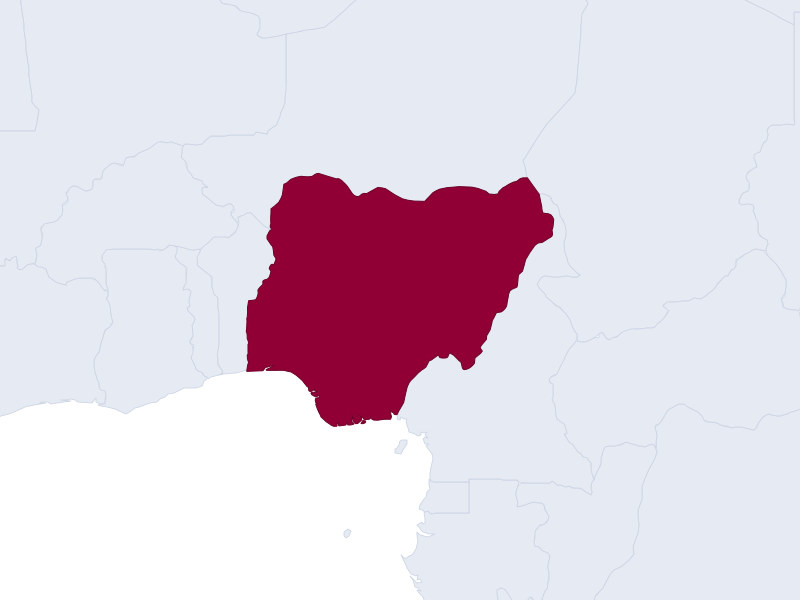
What a repatriation from Nigeria costs
Nigeria prices in the Medium haul, 5 to 8 hours band. The range alongside is bed to bed and all in, covering the ground ambulance at both ends, the UK receiving bed and clinical handover, crew, equipment and oxygen, the seat block or stretcher, handling, landing and permits, the escort return travel and case management. Nothing here is a flight price with extras to follow.
£5,000to£30,000
From a medical escort in an economy seat to an air ambulance, bed to bed and all in.
Figures as at August 2026, from a blend of actual UCS Assist cases and supplier ranges. Ranges are wide because cases are not alike. The full bed-to-bed cost breakdown prices each mode of transport, sets out what moves a case up its band and shows how to sense-check a quote.
Common questions
How capable are the hospitals?
The better private hospitals in Lagos and Abuja are competent and will stabilise and manage a patient properly, and a small number have real intensive care. Below that tier the variation is wide, and public facilities are under pressure. The practical position is that a serious case needs to be in one of a short list of named hospitals rather than simply in a hospital, and establishing which one the patient is actually in is the first job on every case.
Why does malaria feature so heavily?
Because visitors underestimate it and because it presents as something else. A returning traveller or a visitor to family who has stopped taking prophylaxis, or never started, develops what looks like flu. Falciparum malaria can move from unwell to critical inside a day or two, and the delay is almost always in recognising it rather than in treating it. On this corridor it should be the first thing considered in any febrile patient, not the last.
Does a GHIC or the NHS cover anything?
No. There is no reciprocal arrangement, so all treatment is chargeable and the hospitals worth using expect payment to be arranged in advance. A guarantee of payment with clearly defined scope does two jobs here: it secures admission to the right facility, and it prevents an open-ended commitment in a market where billing practice varies considerably.
Is ground transport a problem?
It needs planning rather than assuming, which is not the same as being impossible. Lagos traffic can turn a short transfer into a very long one, and journey timing has to be built around that rather than discovered on the day. Movement outside the main cities and at night requires a proper assessment of the route rather than a booking. None of this stops a case running well; all of it goes wrong if it is left to the last hour.
Can a commercial stretcher be arranged?
Yes. The Lagos and Abuja routes to London have good scheduled capacity and carriers that will accept a stretcher with adequate notice and documentation. At six and a half hours this is a comfortable sector for a stable patient with an escort, and the commercial option is the right one far more often than it is used.
What about airport handling?
It is the step most often underestimated. Moving a stretcher patient through Lagos requires coordinated handling, and the difference between an experienced agent and an inexperienced one is measured in hours on the day of travel. We would rather build a case around a departure where handling is known to work than shave an hour off the flight time.
Other corridors
Managing a case in Nigeria?
Our clinical and operational teams are available around the clock. If the case is live, call rather than email.